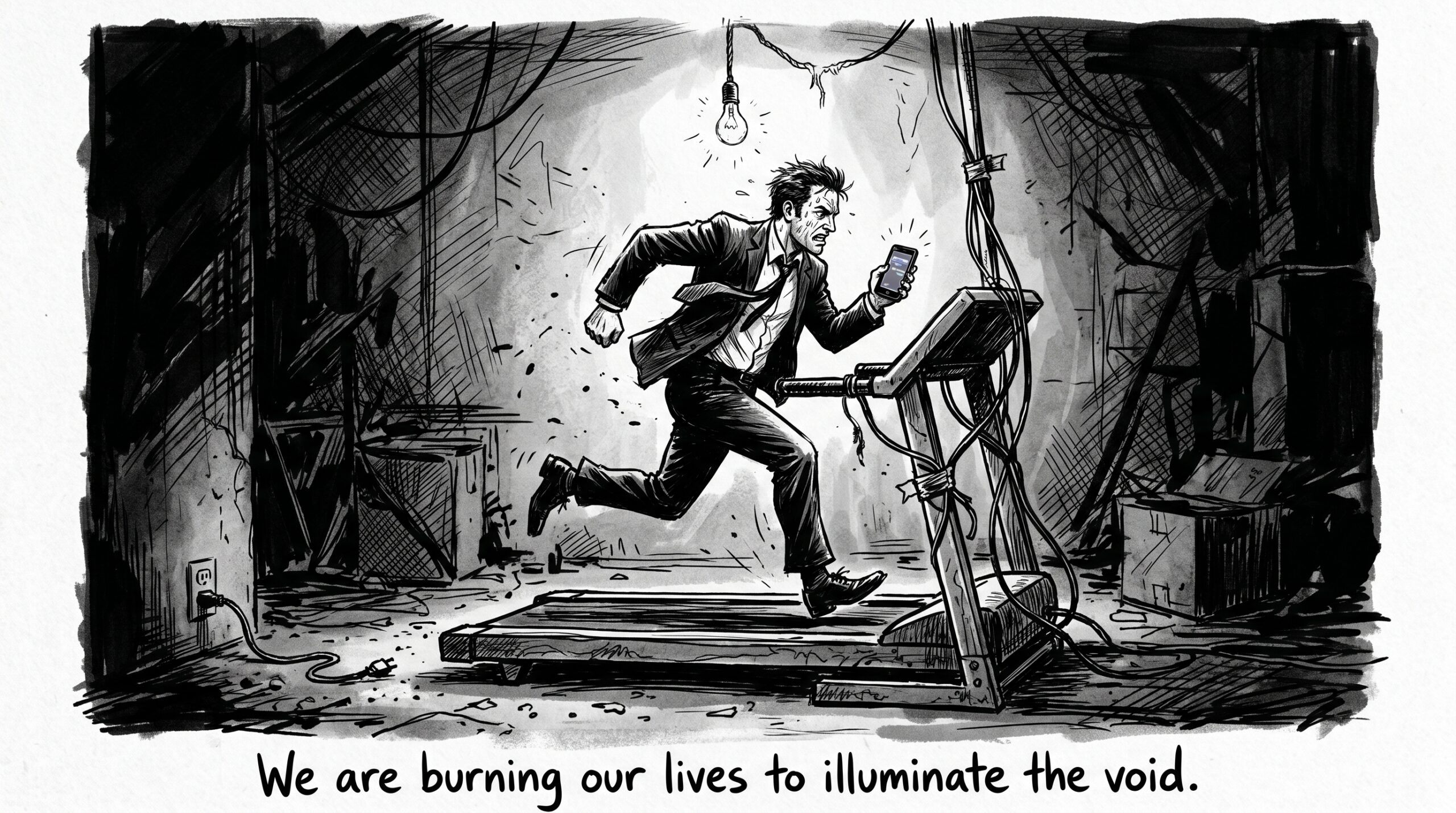
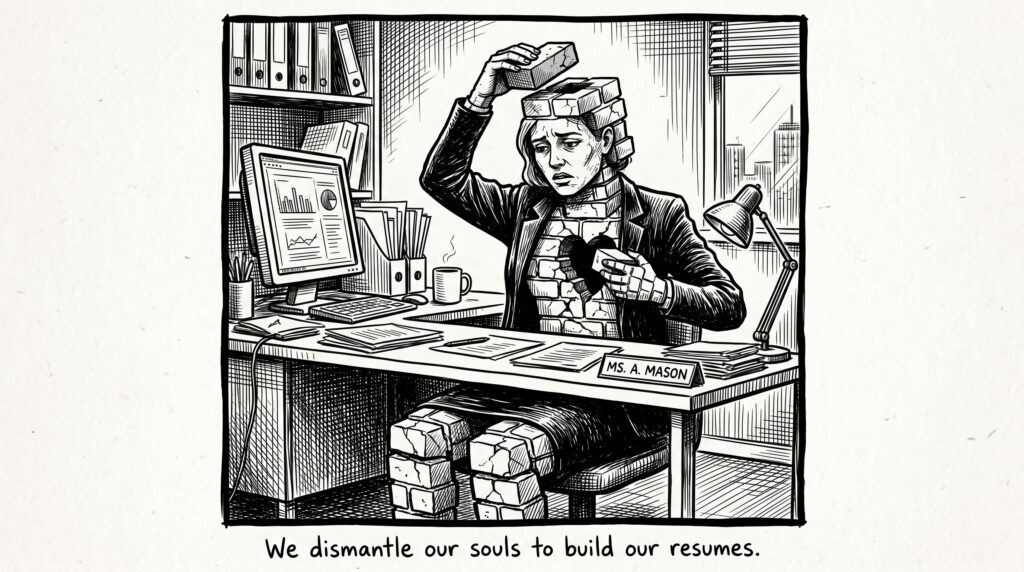
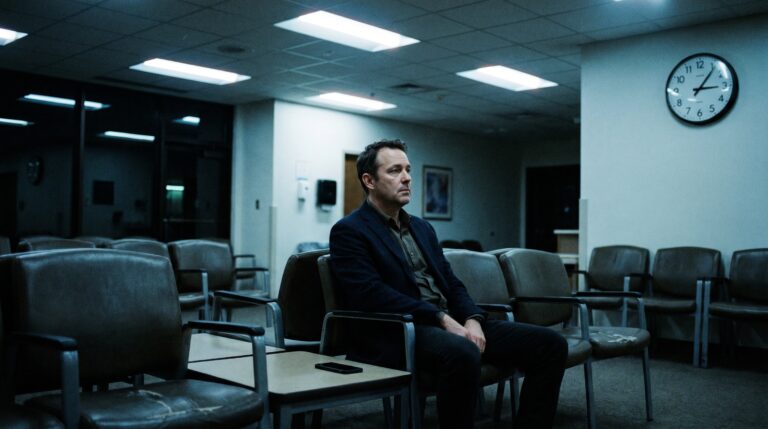
Many of us spend our best energy every day to keep up payments on a version of success we never quite chose.
Stillness has started to feel like a fault. A free afternoon brings guilt, as if we had fallen behind something. So we fill the calendar, race invisible deadlines and carry “productivity” like a duty. Look at the faces on a train at dusk and you see what it costs. People look spent before the evening starts. Relationships fit into the gaps, and nights go to recovering enough to do it again tomorrow. At some point it is fair to ask who is running whose life.
When busyness becomes the point
“Toxic productivity” is the popular name for the pressure to keep working out of fear: of falling behind, of becoming worthless, of being replaced. Busyness turns into proof that we matter. The anthropologist David Graeber went further in Bullshit Jobs (2018). He argued that a large share of people privately believe their own jobs contribute nothing, and keep performing them anyway. Abraham Maslow had a name for a related habit: the “Jonah complex.” It is the fear of our own potential, which keeps us busy with small things so we never have to face the large ones.
What overwork takes
Burnout is what happens when demands run ahead of recovery for long enough. The World Health Organization describes it as exhaustion, mental distance from your job and a falling sense of effectiveness. It also wears down attention to everything outside work. A sunset or a conversation stops registering, because there is nothing left over to notice it with.
The quiet pushback
In 2022 the phrase “quiet quitting” spread across social media. It describes something smaller than a strike: doing the job you are paid for, well, and declining the unpaid extra. Critics call it laziness. Supporters call it a boundary, a refusal to treat your whole self as raw material for an employer.
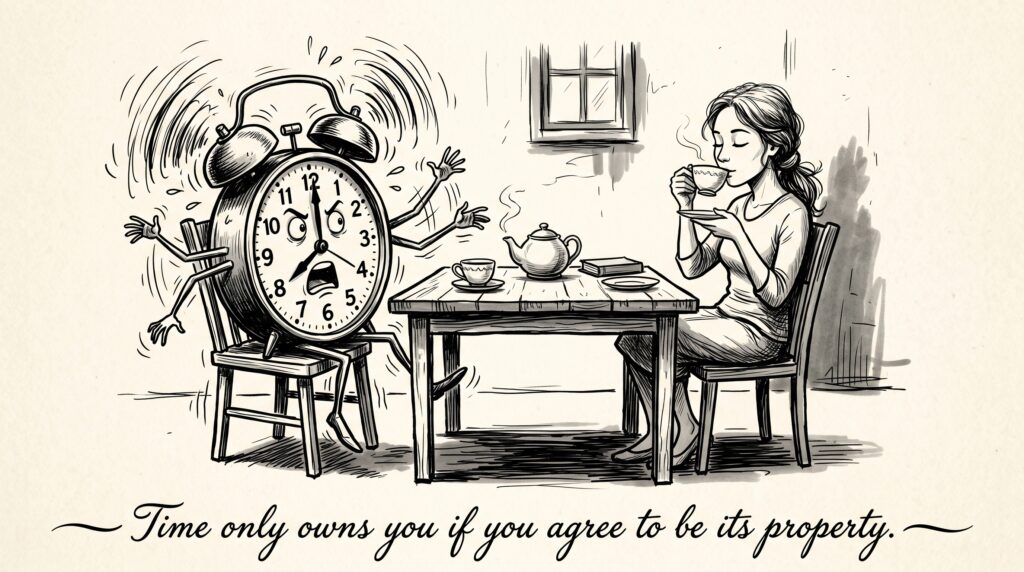
Alongside it, “slow living” has gone from niche to mainstream: slower mornings, homes arranged for rest, work shaped around human limits instead of the reverse. Rest is being reframed as part of a working life, something you plan for, where it used to be a reward you earned after collapsing.
Taking rest seriously
Choosing slower work is a deliberate response to a system that pays poorly for exhaustion, and it can take more courage than staying busy. The useful question to ask is which ladder you are climbing, and whether you ever wanted to be on it.
Try one small experiment this week. Pick one evening and protect it the way you would protect a meeting with your boss: no email, no “quick check,” nothing to produce. Notice what you do with the time when nothing is asking for it. That is a decent first measure of what rest is worth to you.
If this piece resonated, the same idea runs through The Layoff That Never Arrives, on living with uncertainty you can’t control.
M. Caelestis is the pen name of the editor of Time’s Ripple. Aquarium articles here are researched from manufacturers’ product pages and policies, widely used fish-care guidelines and public reviews, and checked against those sources on the date given in each article. Products are not hands-on tested unless an article says so.