Physical Address
304 North Cardinal St.
Dorchester Center, MA 02124
Physical Address
304 North Cardinal St.
Dorchester Center, MA 02124
You swipe your credit card to purchase a designer handbag worth thousands of dollars, knowing all too well that your bank account is empty and you will be surviving on instant noodles next month.
This is not the foolish impulse of a shopping addict, but the silent scream of a generation that has completely lost faith in the future. When persistent inflation chokes out any hope of saving and the dream of owning a home has become a cultural joke, throwing one’s last dollars at instant luxury becomes an instinctive act of emotional survival. Yet, beneath those impulsive receipts lies a black hole of existential anxiety quietly eroding our mental health day by day. How do we break free from this self-destructive cycle when traditional financial advice has become so dogmatic, patronizing, and utterly disconnected from reality? You cannot afford not to read on to find a way out of this existential crisis.
The blue light from a smartphone illuminates a tired face after a ten-hour workday. Their fingers unconsciously scroll through shopping apps, tapping to check out an expensive, non-essential item.
Media outlets label this “Doom Spending” — impulsive consumption driven by anxiety over the future. But if brands and financial institutions only view this as a superficial “shopping addiction” or a “lack of financial literacy”, they are missing the point entirely.
The Core Issue here is not reckless spending habits, but “Financial Nihilism”. When the chasm between stagnant wages and soaring housing prices becomes unbridgeable, traditional milestones of the American Dream — buying a home, starting a family, saving for retirement — feel completely out of reach. Young adults disengage from long-term financial planning because saving feels futile.
The Strategic Boundaries:
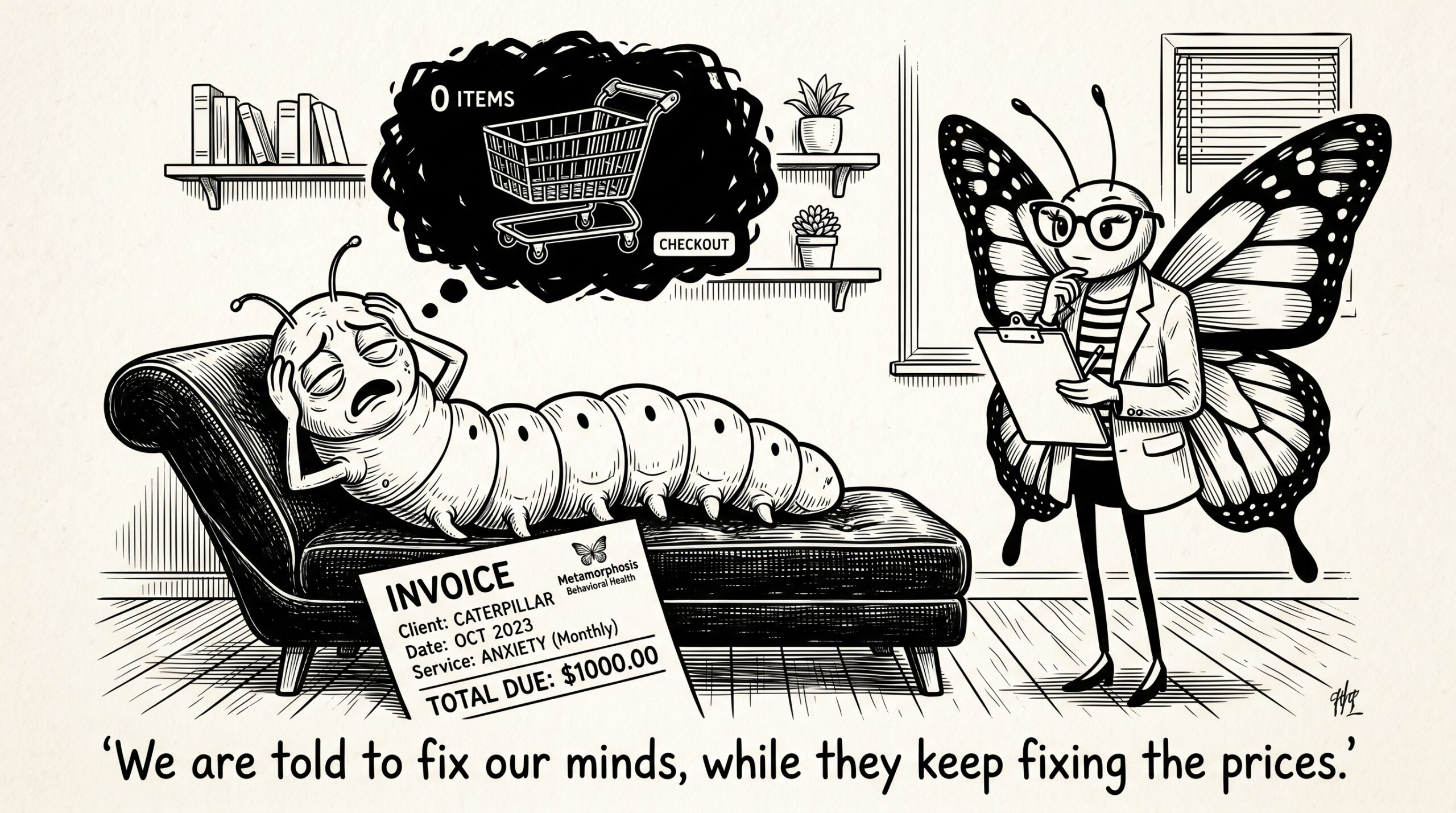
Look at the satirical illustration: a caterpillar lying on a therapy couch, facing a pretentious butterfly therapist. The butterfly delivers a classic line: “The thing is, you have to really want to change.”
This image perfectly mirrors the cruel gaslighting of modern consumer society. It demands that individuals constantly pursue “self-improvement” and “optimization” , forcing caterpillars to sprout wings through sheer willpower , while completely ignoring the structural failures of the environment. Young people are told they are broke because they don’t budget, and anxious because they don’t meditate enough.
But their deepest Insight (Consumer Truth) is a bitter awakening:
“I know swiping my card is impulsive. But when a secure future is an illusion out of reach, denying myself small daily pleasures feels like pointless self-torture. I would rather spend my money today to buy a fleeting moment of joy than break my back saving for a future where I will likely have nothing. I refuse to be a tired caterpillar lying on a couch, listening to a rigged system tell me to ‘just change and save’.”
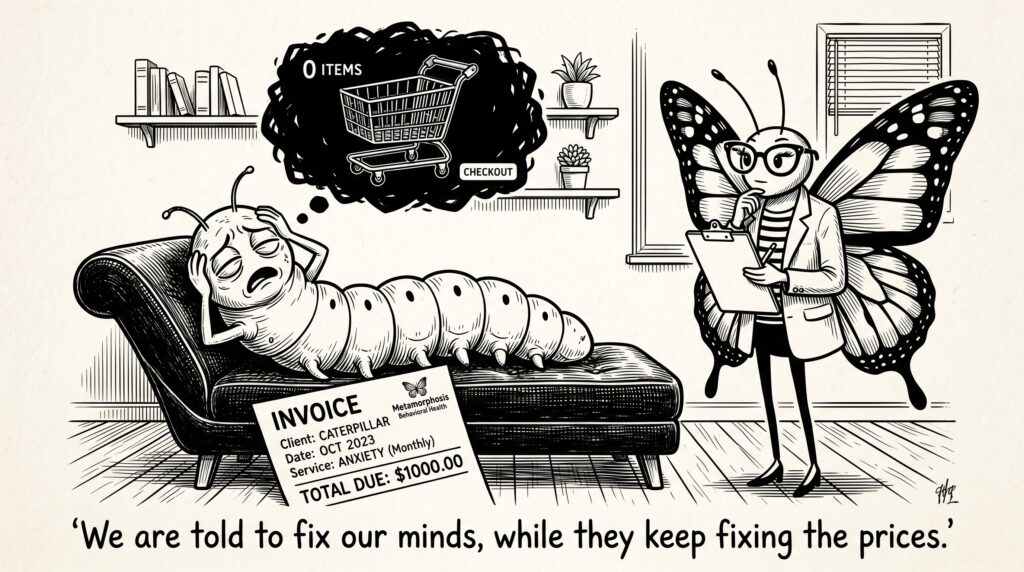
To address this crisis of faith, the solution cannot be dry financial lectures. The Big Idea is “The No-Buy Year Sanctuary”.
We shift the positioning from “saving to get rich” (hollow dogma) to “stopping shopping to get free”. This is not self-deprivation or living like a monk; it is a radical reclamation of emotional sovereignty from manipulative algorithms. By setting strict, intentional boundaries on personal desires, individuals step off the hedonic treadmill and shatter the doom-spending cycle. Choosing “not to buy” becomes a nervous system shield against mental overload.
To make this idea catch fire and reach a social tipping point, we construct an actionable multi-channel matrix:
Communication Channels & Formats:
Mechanics: Organize “No-Buy Year” cohorts utilizing the 25% tipping point rule in closed digital communities. Apply complex contagion theory, using peer networks to reinforce and sustain behavioral change.
Key Performance Indicators (KPIs):
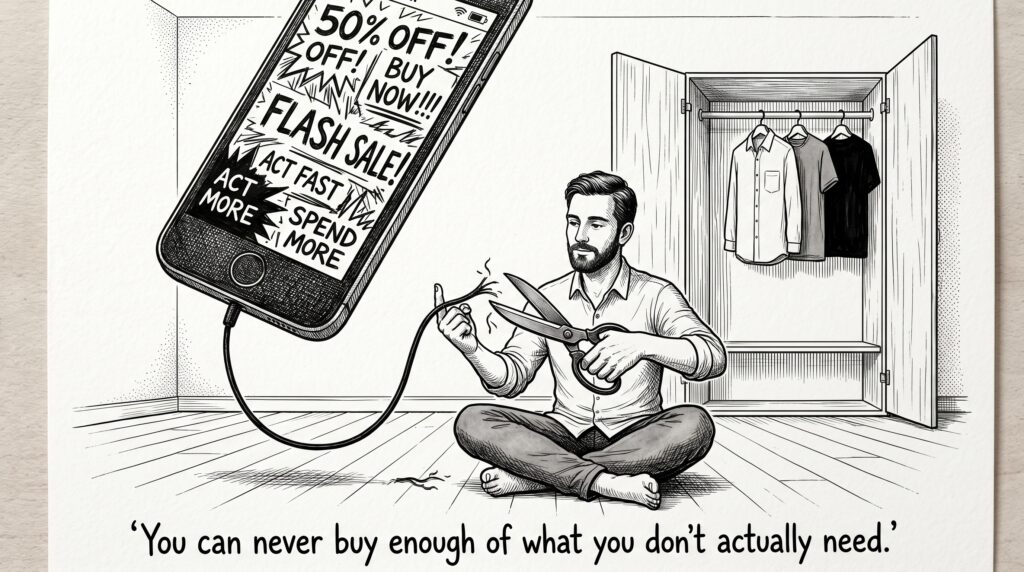
The “No-Buy Year” movement and the rise of intentional simplicity are not surrenders to economic hardship. They are proud declarations of autonomy. When you refuse to define your worth by the things you own, you step down from the judgmental couch of a consumerist society [from image]. You realize you don’t need to sprout wings to fly along a pre-programmed path. Simply standing your ground, breathing, and embracing the quiet power of “enough” is the most revolutionary act of all.