Disclosure: this article contains affiliate links. If you buy through them, Time’s Ripple may earn a commission at no extra cost to you. Product details come from the maker’s published product pages and policies, checked in October 2026. How this site handles affiliate links.
An empty wall is a strange kind of pressure. It sits there, quietly suggesting that the room is unfinished. The easiest response is to fill it with whatever is close at hand. That might be a print from a big-box store, a canvas bought because it was on sale, or three small frames that never quite line up.
I have written before about the appeal of buying less. Buying less does not mean owning nothing. It means that when you do buy, you buy slowly, once, and well. A wall is a good place to practice that, because whatever you hang there, you will look at every day for years.
This guide is about one kind of wall art that rewards a slow decision: layered wood wall art, also sold as 3D or multilayer wood wall art. It is long, because the decision has more moving parts than it first appears. They include size, material, light, where you buy, how to judge quality from a photo, and what the fine print says. If you only have two minutes, skip to the checklist near the end.
Prices at a glance
If you already know you want layered wood, this is what the pieces featured below cost on Stereowood’s own store on October 14, 2026. Most were about 15 percent below list price that day. Shipping, customs and duties to the United States are included.
Links in this box are affiliate links. Prices change, and sale prices more so. The code CUONGPHAMMANH took 10% off when it was tried at checkout in early October 2026; check at checkout whether it combines with a current sale. Policies and trade-offs are in the Stereowood section below.
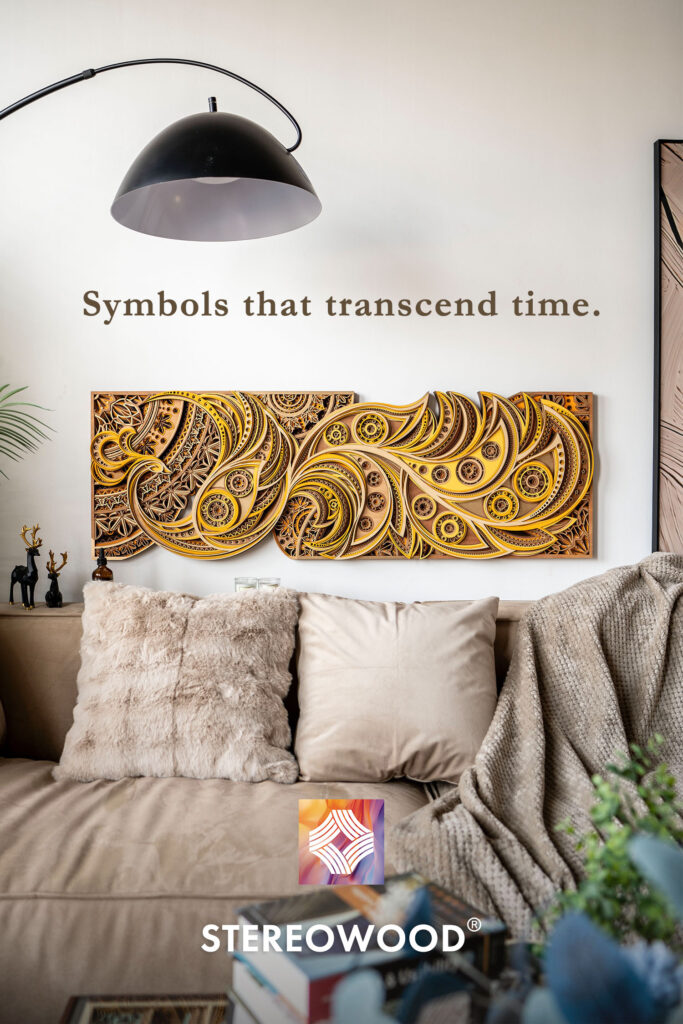
Layered (or multilayer) wood art is built from several thin sheets of wood, each cut into a different shape and stacked on top of the others. Most pieces today are cut with a laser, then sanded, painted or stained, and assembled by hand. The image comes less from paint than from depth: every layer casts a small shadow on the one beneath it.
As the light in a room moves through the day, those shadows move too. The same piece looks different at nine in the morning and at six in the evening. That is the whole appeal, and it is also the first thing to plan around. A flat print looks roughly the same anywhere. A layered piece needs light that falls across it to show what it is.
Is it the right kind of art for you?
Before getting into the details, it is worth being honest about the trade-offs.
Layered wood suits you if you want one strong piece rather than a gallery of small ones and you like texture and natural materials. It also needs a wall that gets some side light from a window or a lamp.
It may not suit you if the wall is in a humid room or the only light comes straight from the front. The same goes if you like to rearrange your walls every season, or prefer a clean, flat, graphic look. A good framed print is lighter, cheaper to replace and easier to move.
1. How big should layered wood wall art be? Size it with numbers
Most regret with wall art is a sizing problem. Pieces almost always look smaller on the wall than they did on a screen. It is easier to rule options out with a tape measure than to fall for one and then make it fit. These rules of thumb are widely used by interior designers:
Above furniture, aim for a piece roughly two-thirds to three-quarters the width of the sofa, bed or sideboard below it. Leave about 8 to 10 inches between the top of the furniture and the bottom of the art.
On an open wall, hang the center of the piece at about eye level, often quoted as 57 to 60 inches from the floor.
Leave breathing room. A large piece needs empty wall around it. Crowding it with shelves or other frames flattens the depth you are paying for.
Here is what that looks like with real furniture:
Furniture below
Typical width
Art width to aim for
Three-seat sofa
about 84 in
about 56 to 63 in
Queen bed
60 in
about 40 to 45 in
King bed
76 in
about 51 to 57 in
Console or sideboard
about 48 in
about 32 to 36 in
Notice what the table implies: a 47-inch square piece, which feels huge in a product photo, is still a little narrow above a full-size sofa. That is where a long horizontal panel or a set of panels starts to make sense.
Before you order, tape a sheet of paper or flattened cardboard cut to the exact dimensions on the wall and live with it for a day or two. It is the cheapest test in home decorating.
2. Choose a shape that suits the space
Square or round pieces work as a single focal point: above a console, at the end of a hallway, or centered on a bedroom wall. Many designs come in several sizes, for example 23.6, 31.5 and 47.2 inches square.
Long horizontal panels, such as 15.7 × 47.2 inches or 23.6 × 70.9 inches, are made for the space above a sofa or a bed. A square piece would look too small there.
Tall vertical panels suit narrow walls: between two windows, beside a doorway, or in a stairwell.
Multi-panel sets split one image across two to four pieces. They can cover a wide wall and are easier to ship than one enormous panel, but they need careful, level hanging and consistent gaps between the pieces.
3. Plywood, MDF or solid wood? Understand the material
“Wood art” covers several quite different materials, and the difference shows up years later rather than on the day it arrives.
Material
What it is
Strengths
Watch out for
Birch plywood
Thin sheets of birch glued with the grain crossed
Stays flat, cuts cleanly, light for its strength
Quality varies; look for a stated grade or certification
MDF
Fibers pressed with resin into a board
Very smooth, takes paint well, inexpensive
Heavier, and swells if it gets wet
Solid wood
Single boards of natural timber
Rich grain, can be refinished
Moves with humidity; thin layers can warp or crack
Two more things to check on the product page: the layer count and weight (more layers usually means more depth, and more weight to hang). The other is whether the wood is FSC-certified. FSC certification means the timber comes from forests managed under the Forest Stewardship Council’s standards. It is one of the few sustainability claims in furniture and decor that is independently audited.
Finally, decide between painted and natural finishes. Painted layers give a graphic, colorful look and can be matched to a room. Natural or stained wood is quieter and sits easily next to wooden furniture, but the depth relies entirely on shadow, so it needs better light.
4. Mind the light and the air
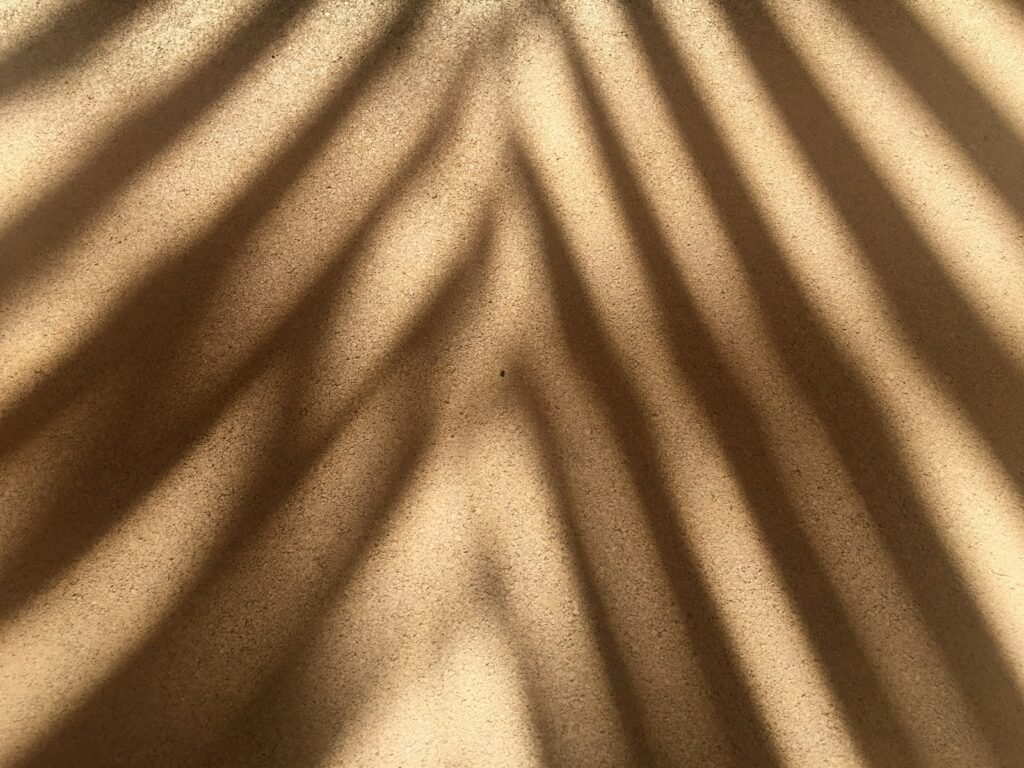
Side light turns a flat wall into texture. The same principle gives layered wood its depth. Photo by Agata Create on Unsplash
Because the effect depends on shadow, the best walls get light from the side. That could be a window on an adjacent wall, a floor lamp, or a picture light angled down from above. Light coming straight at the piece from the front tends to flatten it. If you add a picture light, a warm bulb in the 2700 to 3000 kelvin range usually flatters wood more than a cool white one.
Wood also reacts to its surroundings. Keep it away from humidity and from strong direct sun, which can affect paint and finish over time. Bathrooms, the wall above a kettle or stove, and a spot that takes afternoon sun all day are poor choices, and outdoors is out of the question. For cleaning, a soft dry cloth or brush is enough; water and cleaning sprays are best avoided.
5. Room by room
Living room: the classic place for a large horizontal panel or set above the sofa. Check the sizing table above first.
Bedroom: above the headboard, keep the piece well fixed and not too heavy, since it hangs over where you sleep. Calm, natural tones tend to work better than busy, high-contrast designs.
Home office: a medium square piece behind your desk doubles as a video-call background. Check how it looks on camera, since fine detail can turn into visual noise at low resolution.
Hallway or entry: a smaller square or round piece at eye level, ideally where a lamp or window lights it from the side.
Kitchen and bathroom: usually best avoided because of steam and humidity.
6. Where to buy layered wood wall art: four routes
There is no single right place to buy layered wood art. Each route trades something for something else.
Route
Best for
Trade-offs
A specialist maker with its own store
Consistent quality, a range of sizes, clear written policies
Usually costs more; may ship from abroad, so check delivery times and duties
Independent sellers on a marketplace such as Etsy
Unique designs, direct contact with the maker, smaller pieces
Quality and policies vary seller by seller; read each shop’s reviews and return terms
Large general retailers
Fast delivery, easy returns, lower prices
Often thinner, mass-produced pieces with fewer layers
A local woodworker on commission
A truly one-off piece, exact size, no shipping risk
Takes longer; you need a clear brief and a written quote
One caution applies everywhere: popular designs are sometimes copied. Some listings use the same photos as a maker’s own website at a fraction of the price. Treat those with suspicion and buy from the original source.
7. How to judge quality from a product page
You cannot touch the piece before it arrives, so the listing has to do the work. A careful seller makes these easy to find:
Close-up and side-angle photos. They show how many layers there really are and how deep the piece is. A single straight-on photo hides both.
Clean edges. Laser cutting can leave darkened, scorched edges. Some makers sand or paint them; others leave them visible, which can be a style choice or a shortcut.
Exact specifications: dimensions, layer count, thickness and weight, not just “large.”
A photo of the back, or at least a description of how it hangs.
Customer photos in reviews. They are far more useful than a star rating, because they show the piece in ordinary rooms and ordinary light.
8. Plan how it will hang
Larger pieces need two fixing points, not one, and those should go into a wall stud or a wall plug rated for your wall type and the piece’s weight. Use a level and measure twice, especially with multi-panel sets, where a small error between panels is obvious. Before ordering, find out what comes in the box. Some makers pre-attach the hardware and include nails and instructions; others leave it to you.
9. Think about cost per year, not price
What drives the price of layered wood art is mostly size, layer count, hand painting and customization. A large piece is a real expense, and it is worth thinking about it the way you might think about a good coat or a chair. Divide the price by the years you expect to look at it. A piece you love for ten years is cheaper per year than three prints you replace because none of them felt right.
That logic only holds if the piece survives those years, which is why the material, the light and the warranty matter more here than with a print.
10. Read the policies before you fall in love
Large wall art is expensive to ship back, so the policies matter as much as the design. Look for clear answers to these:
Shipping: is it included, how long does it take, and will customs fees appear at the door if it ships from abroad?
Returns: how many days, in what condition, and who pays to send it back? Return shipping on a large, heavy box can be expensive. Custom pieces are usually not returnable at all.
Damage on arrival: how quickly must you report it? Unpack and inspect the piece the day it arrives, and keep the packaging until you are sure.
Warranty: what exactly does it cover, and what does it exclude? “Lifetime warranty” often means craftsmanship defects only.
I am featuring one maker here because I have read its policies line by line, not because it is the only good option. Stereowood is a specialist maker that, according to its own site, has produced multilayer wood art since 2017, using FSC-certified birch plywood. Here is what its published policies said when I checked in October 2026:
Shipping: free air shipping on all orders, with no minimum. Orders are processed within 1–4 business days, and delivery to the United States is estimated at 7–10 business days.
Customs: the company says it covers customs, duties and import taxes, so there should be nothing extra to pay on delivery.
Returns: 30 days from receiving the item, which must be unused and in its original packaging. Custom-made pieces are not eligible, and its shipping policy says the customer pays the return shipping.
Damage: report a damaged or incomplete order within 7 days, with photos; the company offers a replacement or a full refund.
Warranty: a lifetime warranty against craftsmanship defects. It excludes damage from moisture, heat, improper installation and outdoor exposure.
Hanging: mounting hardware comes pre-attached, and the package includes instructions, a measuring tape, a pencil and nails for common wall types.
Measured against the questions above, the strong points are the included shipping and duties, the pre-attached hardware and a warranty that is specific about what it covers. The points to weigh are that returns must be unused and in the original packaging, custom work cannot be returned, and delivery takes one to two weeks rather than days.
A few pieces from its best-selling collection, grouped by the kind of wall they suit:
For a smaller wall or a hallway:Kalachakra Mandala and Astral, both offered from 15.7 inches square.
For a single focal point:Koi and Lotus and Mystic Deer, each in 23.6, 31.5 and 47.2 inches square.
Above a sofa or bed:Dancing Koi and Phoenix Perch, in 15.7 × 47.2 or 23.6 × 70.9 inches. By the guideline above, the larger size suits a long sofa of roughly 95 inches or more; above a standard 84-inch sofa it will look generous.
For a wide wall: the Compass set, four panels of 15.7 × 47.2 inches that can also be bought individually.
Koi and LotusPhoenix PerchKalachakra MandalaImages: Stereowood, from its media kit for affiliates.
The company also takes custom orders for sizes, colors and engravings, with a lead time it puts at about one to two weeks. Remember that custom pieces cannot be returned.
If you decide to buy, the code CUONGPHAMMANH took 10% off at checkout when it was tried at checkout in early October 2026. It is my affiliate code, so using it also credits the purchase to this site. Codes and prices change, so confirm the total before you pay.
If Stereowood is not the right fit
If you need it within days, a large retailer with domestic stock will be faster, at the cost of depth and detail.
If you want something nobody else has, search Etsy for “layered wood wall art” and contact a few sellers directly, or ask a local woodworker for a quote.
If the wall is humid or gets harsh sun, consider a framed print behind UV-filtering glass instead. It is the more sensible choice for that wall.
If you are not sure yet, wait. More on that below.
Layered wood wall art checklist
I have measured the wall and the furniture below it, and the size fits the two-thirds to three-quarters rule.
I have taped a paper template to the wall and lived with it for a day.
The wall gets light from the side, and it is not in a humid room or in harsh direct sun.
I know the material, layer count and weight, and how it will be fixed to my wall.
I have read the shipping, return, damage and warranty terms, and I know who pays for a return.
I have seen customer photos, not just the seller’s.
Frequently asked questions
Is layered wood wall art worth the price?
It can be, if it fits the wall and gets the light it needs. Its value comes from depth and changing shadow, which a print cannot copy. On a front-lit wall or in a humid room, a good print is the better buy.
Can I hang it in a bathroom or kitchen?
Generally no. Steam and humidity can warp wood and damage finishes, and most makers exclude moisture damage from their warranties.
How do I clean it?
Dust it gently with a soft, dry brush or cloth, working with the layers rather than across them. Avoid water and cleaning sprays.
Will the colors fade?
Strong direct sunlight can affect paint and finish over time, so a wall out of the afternoon sun is the safer choice for a painted piece.
What size should I choose above a sofa?
Aim for two-thirds to three-quarters of the sofa’s width. For a typical 84-inch sofa, that is about 56 to 63 inches wide, which usually means a long horizontal panel or a set rather than a single square.
Let the wall stay empty a little longer
The best advice I can give about wall art has nothing to do with wood. If nothing you have seen feels right yet, leave the wall empty. An empty wall costs nothing and asks nothing of you. A piece you chose in a hurry asks for your attention every time you walk past it.
Measure the wall, watch how the light moves across it for a few days, read the fine print, and buy once.
Photos: Bernard Hermant and Agata Create on Unsplash; they show light on walls, not the products in this article. Product images: Stereowood. Prices, sizes and policies: Stereowood’s product pages, shipping policy and refund policy, checked on October 14, 2026.
M. Caelestis is the pen name of the editor of Time’s Ripple. Aquarium articles here are researched from manufacturers’ product pages and policies, widely used fish-care guidelines and public reviews, and checked against those sources on the date given in each article. Products are not hands-on tested unless an article says so.