Disclosure: this article contains affiliate links. If you buy through them, Time’s Ripple may earn a commission at no extra cost to you. Product details come from the maker’s published product pages and policies, checked in October 2026. How this site handles affiliate links.
A sponge filter is the plainest filter you can put in an aquarium: a block of foam on a tube, driven by air from a small pump outside the tank. It has no impeller in the water and almost nothing to break, which is why breeders, shrimp keepers and many betta owners use one even when they could afford something more elaborate.
It also gets misunderstood. People buy one without an air pump, clean it under the tap, or expect it to clear tinted water it was never built to touch. This guide explains what the foam actually does, how to size the filter and the pump, how to set it up, how to clean it so the tank keeps its bacteria, and what to do when the bubbles slow down.
Near the end there is a seven-line checklist for buying and running a sponge filter, and a short FAQ that answers the questions people search most, from “does a sponge filter need an air pump?” to “do sponge filters need to be replaced?”
The short answer
A sponge filter cleans water mechanically and biologically, and it is gentle enough for bettas, shrimp and fry. Most need a separate air pump, sold on its own. Size the filter to your tank’s gallons and depth, place the pump above the water line or add a check valve, and squeeze the sponge in old tank water about once a month or whenever the bubbles weaken.
Links in this box are affiliate links. Prices and stock are from hygger’s US store on October 20, 2026 and change often. Full details and trade-offs are in the hygger section below.
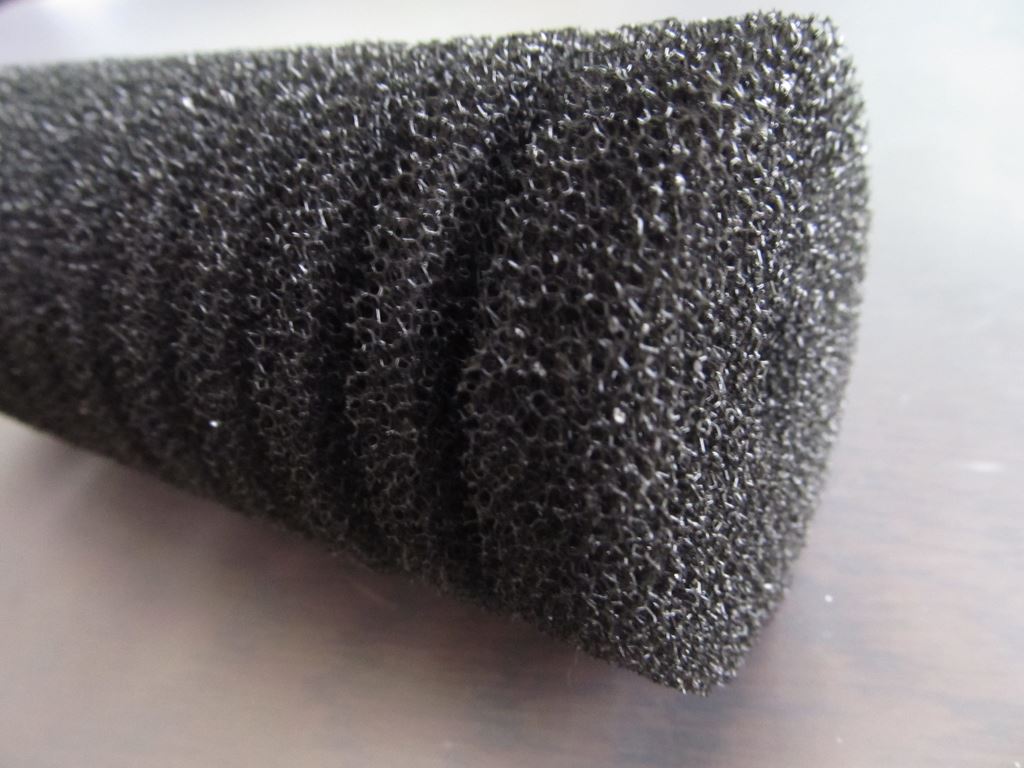
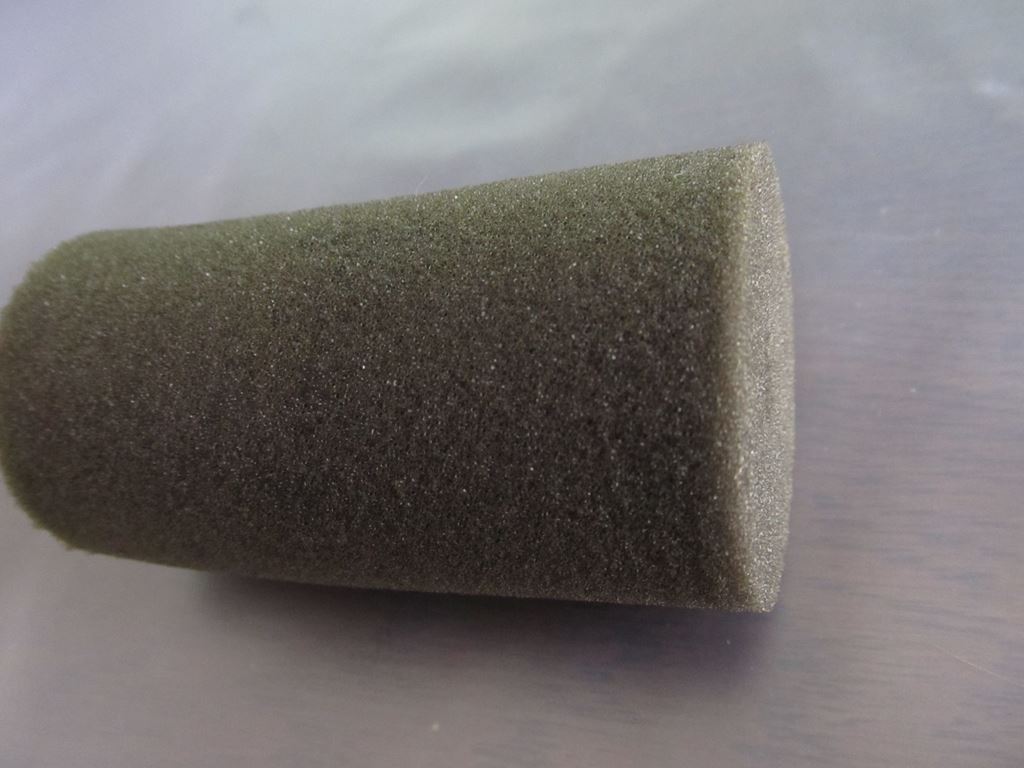
Fine filter foam traps smaller particles, but it clogs sooner and floats more often than coarse foam. Photo: Ofkun, Wikimedia Commons, CC BY-SA 4.0.
1. How a sponge filter works
An air pump sits outside the tank and pushes air down a thin tube into the hollow center of the sponge filter. Aquarium Co-op describes what happens next: bubbles rise from inside the sponge and up the lift tube, and that rising column draws water in through the foam walls. Water enters through every part of the sponge at once, slowly, and leaves at the top along with the bubbles.
Two kinds of filtering happen on the way through.
Mechanical. The foam catches loose debris: uneaten food, plant bits and fish waste. That is the part you can see, and the reason the sponge turns brown.
Biological. Over a few weeks, the foam becomes home to beneficial bacteria that turn ammonia from fish waste into nitrite and then into the less harmful nitrate. This is the more important job. Some models, including the two hygger filters below, add a small chamber of ceramic media to give the bacteria more surface.
The bubbles also break the water surface on their way out, which helps gas exchange. That is why it is often described as filter and aerator in one.
What it does not do is chemical filtration. Plain foam holds no activated carbon, so it will not remove the tea color that driftwood can leave or pull medication out of the water. If you need that, it takes a filter with room for chemical media.
2. What a sponge filter does well, and where it falls short
Aquarium Co-op sums up the appeal in three points: sponge filters are cheap, easy to clean, and hard to break because they have very few mechanical parts. They also note that the gentle intake does not suck up fry, shrimp or slow-moving fish, and that shrimp and fish graze on the foam surface.
Strength
Limitation
Gentle intake that baby fish and shrimp cannot be pulled into
Takes up room inside the tank and is hard to hide in a small aquascape
No motor in the water; the air pump stays outside
Needs a separate air pump, tubing and often a check valve
Few parts, so little to fail
The bubbling makes a constant sound some people notice at night
Bacteria live in foam that stays underwater during a power cut
Moves less water than most powered filters of the same price
Easy to clean in a bucket of tank water
No chemical filtration
The power-cut point deserves a line of its own. If the electricity goes off, it stops moving water like any other filter. But the foam stays submerged in oxygenated tank water, which Aquarium Co-op notes gives the bacteria a better chance of surviving than they would have in a filter box that drains or sits still. A battery-backup air pump keeps the bubbles going through an outage.
3. Sponge filter vs hang-on-back filter
This is one of the most searched comparisons, and the honest answer is that both work. They suit different tanks. The table sets out the common trade-offs keepers weigh.
Sponge filter
Hang-on-back (HOB) filter
Where it sits
Inside the tank, usually in a back corner
On the rim, with only the intake tube in the water
Power
A separate air pump (or a USB pump on some models)
Its own motor
Flow
Gentle
Stronger, often adjustable
Safe for fry and baby shrimp
Yes
Only with a sponge over the intake
Chemical media such as carbon
No
Yes, in most models
Ongoing cost
Replacement foam now and then
Cartridges, if you use the maker’s
Looks
Visible in the tank
Mostly outside the tank
Plenty of keepers combine the two. A pre-filter sponge slipped over a HOB intake keeps shrimp and fry out and catches debris before it reaches the cartridge. In larger tanks, a foam filter is often added to a HOB or canister as a second source of bacteria and surface movement, which is also what hygger suggests for its biochemical sponge filter in big tanks.
4. What size sponge filter and air pump you need
These filters are sold by tank size in gallons, and the better listings add a maximum tank depth and a minimum air pump rating. Depth matters because a tall tank needs more air to lift water up a longer tube. Aquarium Co-op’s rule of thumb runs the other way too: in tanks less than 10 inches deep you can cut the lift tube down, and in tanks taller than 22 inches they stack two or more sponges.
Here is how one maker sizes its range, which shows the three numbers to look for on any listing:
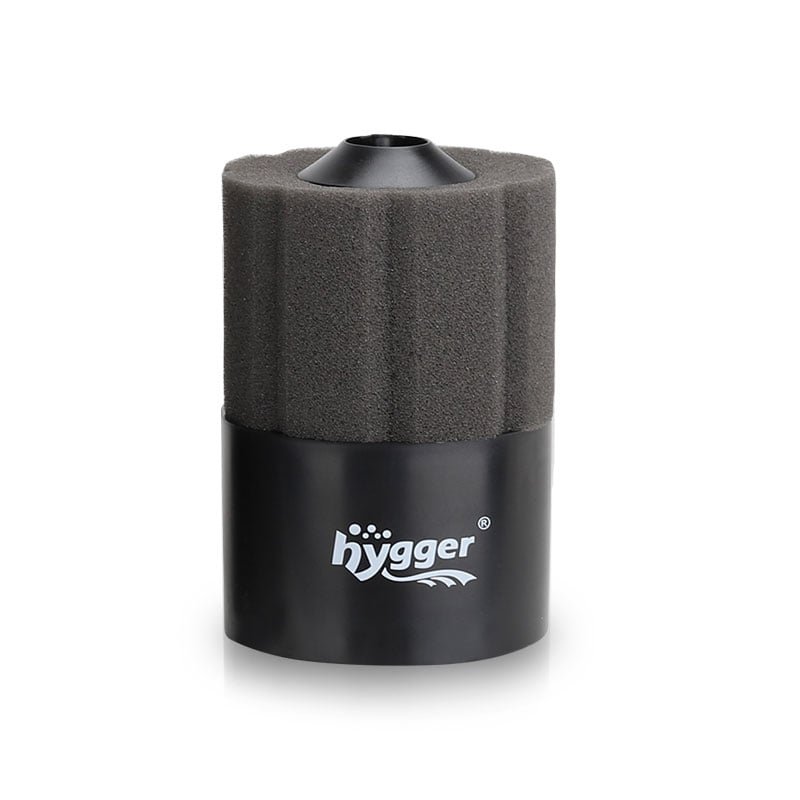
hygger Biochemical Sponge Filter size
Tank size
Max tank depth
Minimum air pump
Small
5 to 20 gallons
Under 14 inches
1.5 W
Medium
20 to 55 gallons
Under 19.7 inches
2 W
Large
55 to 125 gallons
Under 26.4 inches
5 W
A few practical points on sizing:
When you sit between two sizes, go bigger. A larger sponge holds more bacteria and clogs more slowly, and you can turn the airflow down if the current is too much.
In a heavily stocked or large tank, two filters in opposite corners spread the flow better than one large one. hygger’s double filter listing says the same: “For a larger tank, you may need 2 of the filters.”
The air pump must reach the filter’s minimum. An undersized pump gives a weak trickle of bubbles and little flow. A pump with an adjustment knob, or a cheap airline valve, lets you turn a stronger pump down.
Air pumps use little electricity. A 1.5-watt pump running all day uses about 13 kWh a year, roughly $2.40 at the 18.2 cents per kWh US average used in my fish tank electricity cost guide.
5. How to set up a sponge filter
Setup takes about ten minutes. These steps follow Aquarium Co-op’s guide and the instructions on hygger’s listings.
Rinse the new parts. hygger asks you to rinse and soak the filter materials before first use. Use dechlorinated water if the sponge is going straight into a tank that already holds fish.
Assemble the filter. Fit the sponge over the strainer, attach the base and the lift tube, and fill the ceramic media chamber if your model has one.
Connect the airline. Push one end of the tubing onto the filter’s air inlet and run the other end to the pump.
Fit a check valve if the pump sits lower than the tank. Aquarium Co-op notes that a check valve stops water running back down the tube into the pump if the power goes off. The flapper side faces the pump; installed backwards, no air will flow. hygger gives the same instruction for its Mini Air Pump: keep it above the water level or install a check valve.
Place the filter. Put it in a back corner, squeeze out trapped air so the sponge sinks, and leave space around the foam so water can enter from all sides.
Make a drip loop. Let the pump’s power cord hang lower than the outlet before rising to it, so any water running down the cord drips off instead of reaching the plug.
Switch on and watch. Aquarium Co-op says bubbles should appear within a few seconds. Adjust the outlet height: they suggest about one-third of the outlet above the water and two-thirds below to balance flow and splash.
A new sponge has no bacteria yet. In a new tank, it needs to go through the normal cycle before fish or shrimp go in. My shrimp tank guide walks through cycling step by step. If you already run a mature tank, a sponge that has lived in it for a few weeks can go straight into a new or quarantine tank with its bacteria already in place, which is a common reason keepers leave a spare sponge running in their main tank.
6. How to clean a sponge filter
The foam is a trash can for debris, and it fills. Aquarium Co-op recommends cleaning once a month or whenever you see fewer bubbles. hygger’s listings say every two to four weeks, depending on how heavily the tank is stocked. Use the bubbles as your guide: when they slow, it is time.
How to clean it without wiping out the bacteria:
Take out a bucket or pitcher of tank water during a water change. This is your rinse water.
Lift the filter out gently. Aquarium Co-op slips a bag or pitcher around the sponge underwater first, so the debris does not cloud the tank as you lift it.
Squeeze the sponge in the tank water several times, like wringing out a dish sponge. Pour that water away, take a little more from the tank, and repeat until the foam is mostly clear. It does not need to look new.
Clean the lift tube and air outlet if they are coated, then reassemble and put the filter back.
Why tank water and not the tap? Tap water often contains chlorine or chloramine, which are added to kill germs. Rinsing in old tank water is the standard advice because it does not expose the filter bacteria to either. Some keepers with long-established tanks rinse in dechlorinated tap water without trouble, but tank water is the safer default, especially in the first months.
Two habits that help: clean the filter and do a large gravel vacuum on different weeks, so you never disturb all the bacteria at once, and never let the sponge dry out while it is out of the tank.
7. Sponge filter problems and fixes
Problem
Likely cause
What to try
Bubbles weak or stopped
Clogged foam (the most common cause), a kinked tube, or a check valve fitted backwards
Clean the sponge; straighten the tubing; flip the check valve
Sponge floats
Trapped air, or a fine, light foam
Squeeze the air out underwater. Aquarium Co-op notes fine sponges float more often than coarse ones
Loud bubbling
Large bubbles bursting at the surface, or a pump vibrating on a hard shelf
Lower the outlet, turn the airflow down, or use an air collar instead of a large air stone; Aquarium Co-op says the collar’s smaller bubbles reduce the noise. Set the pump on a soft pad
Water still cloudy
A new tank still cycling, overfeeding, or fine particles the foam cannot trap
Feed less, test ammonia and nitrite, and give a new tank time
Tea-colored water
Tannins from driftwood or leaves
Harmless to most fish. A sponge filter cannot remove it; carbon in another filter can
Water in the air pump
Pump below the water line with no check valve
Unplug before touching it; fit a check valve or move the pump higher
8. Is a sponge filter enough for your tank?
For a betta: usually yes, and it is a common choice. Bettas have long, heavy fins, and the main filter risk for them is too much current, which I cover in the filter section of my betta tank setup guide. A filter sized for the tank gives slow flow from the start, and you can turn the air down further if the fish struggles near the outlet.
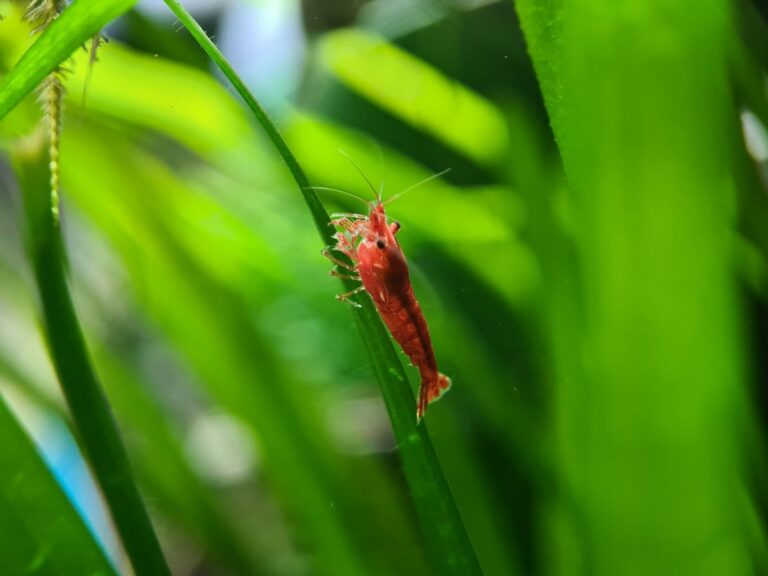
For shrimp and fry: this is what these filters do best. Baby shrimp and newly hatched fry are small enough to be pulled into a normal intake, and the foam gives shrimp a surface to graze. My shrimp tank setup guide uses one for that reason.
For a planted tank: it works in small, lightly stocked tanks. If you inject CO2, keep the airflow moderate. Strong bubbling drives some of that CO2 back out of the water, while my aquarium CO2 guide still recommends a gently rippling surface so fish get enough oxygen.
For goldfish or a heavily stocked tank: goldfish produce a lot of waste. One foam filter is rarely enough on its own. Use two large ones, or pair one with a stronger filter, and keep up with water changes.
Listings for this kind of filter are often vague about which tanks they fit. hygger is more specific than most: its main sponge filter gives a tank depth limit and a minimum pump wattage for each size, and its listings print the full package contents, so you know whether a pump, spare foam or valve is in the box. Gallons, depth, pump rating and box contents are the four things worth checking on whichever brand you buy.
Shipping and returns
hygger’s shipping policy offers free delivery anywhere in the contiguous US; orders to Alaska, Hawaii, US territories, P.O. boxes and military addresses do not qualify. A filter and pump are light, so the main thing to check on arrival is that the lift tube and suction cups survived the trip. For return windows and warranty terms, see where my betta tank guide covers hygger’s policies.
Three sponge filters and a pump
The single filter:Aquarium Biochemical Sponge Filter. Small (5 to 20 gallons) is $13.99, Medium (20 to 55) $15.99 and Large (55 to 125) $20.99, with the depth and pump limits in the table in section 4. It combines a high-density sponge with a ceramic media chamber. The box holds the filter with its media container, one replacement sponge and a manual. The air pump is not included. It had 29 reviews averaging 4.93 on hygger’s store. Check current price.
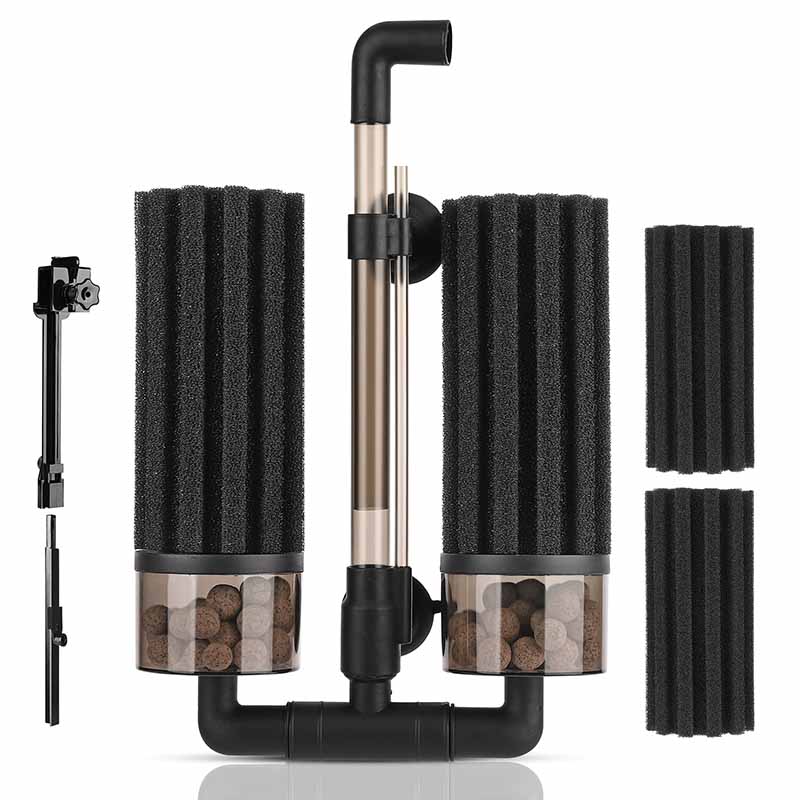
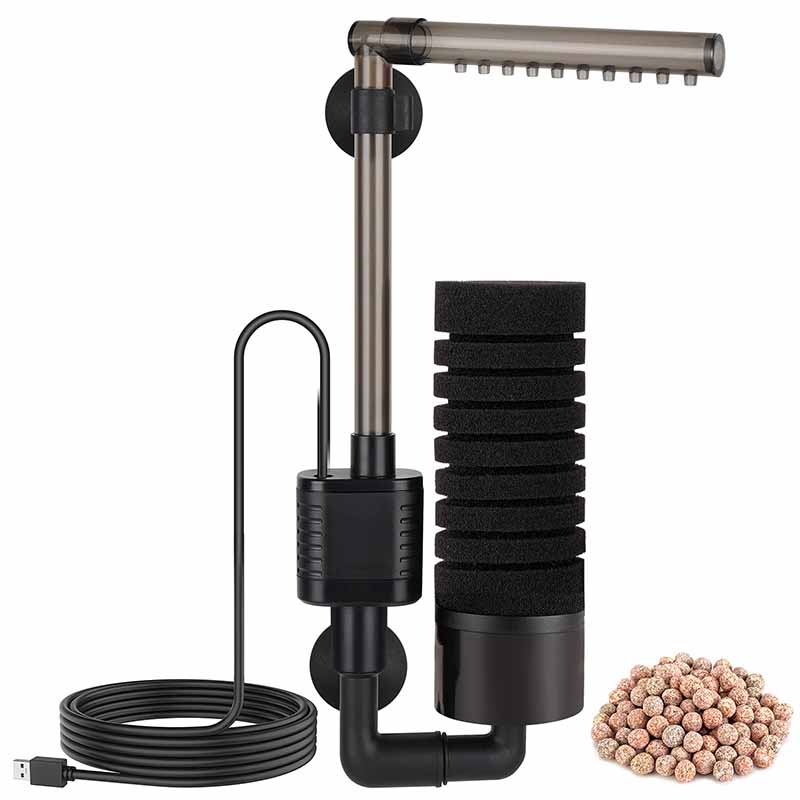
The double filter:Double Biochemical Sponge Filter (HG256). The S size suits 10 to 40 gallons and measures 6 x 9 x 14 inches ($22.99); the M size suits 15 to 55 gallons ($24.99). In the box: the double sponge filter with a media container, ceramic balls, two spare sponges, an airflow regulating valve, two suction cups, a filter support and an extendable outlet. hygger notes that with the outlet below the surface it aerates, and above the surface it runs as a small waterfall. Replacement sponges cost $12.99 (S) and $13.99 (M). The air pump is not included. It had 13 reviews averaging 5.0. Check current price.
The no-air-pump option:USB Electric Aquarium Sponge Filter (HG176). A small 5V USB water pump moves the water through a sponge and a ceramic media box, so it does not need an air pump. The size options at checkout read “S for less than 10 Gal” ($17.99) and “M for less than 30 Gal” ($19.99). The description elsewhere on the page suggests larger tanks, so I would go by the smaller figures. The USB power adapter is not included (hygger specifies DC 5V 1A), and it mounts with suction cups or a clip for glass under 0.6 inches thick. It had 15 reviews averaging 5.0. Check current price.
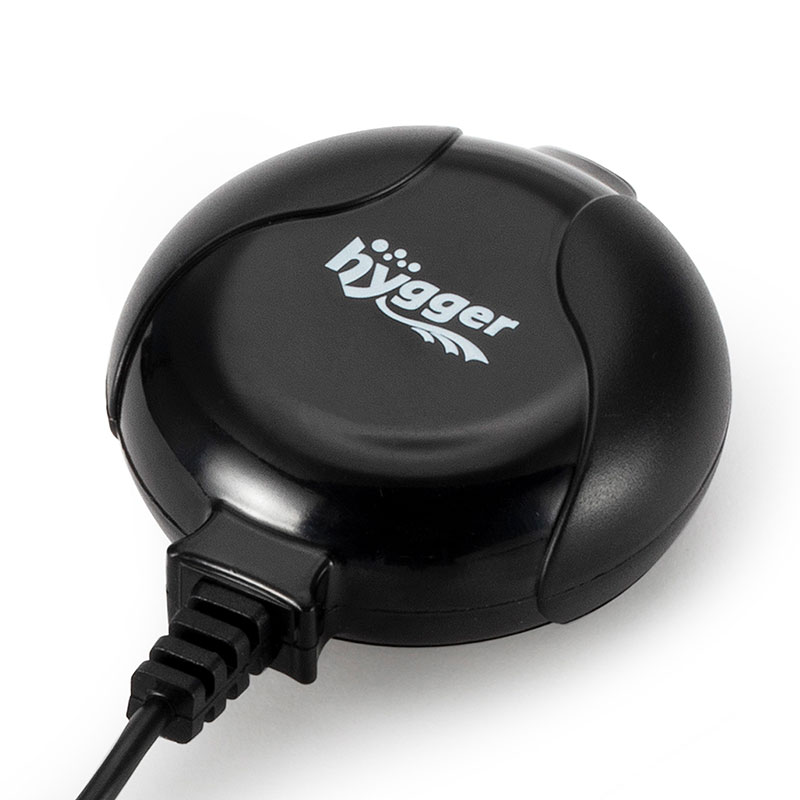
The air pump:Mini Air Pump, $15.99 in black or $16.99 in white. Its 1.5-watt draw is exactly the minimum the Small biochemical filter asks for. hygger rates its output at 420 ml of air per minute and lists it for 1 to 15 gallon tanks. It comes with an adapter, 3.6 feet of silicone tubing and a small air stone. It is not submersible. Check current price.
The single biochemical filter is inexpensive and its sizing table removes most of the guesswork. The double filter costs more but arrives with spare foam and a flow valve, which you would otherwise buy separately. Review counts are small across all three, between 13 and 29 per filter, so treat the near-perfect averages with that in mind. Neither air-driven filter includes a pump, so budget roughly $16 or more on top. The USB model avoids the pump but needs its own 5V adapter, puts a small motor in the water, and stops completely in a power cut, which removes one of the main reasons people choose a sponge filter.
If this is not the right fit
If you want the filter out of sight, a hang-on-back filter with a pre-filter sponge on the intake keeps most of the hardware outside the tank and stays safe for small livestock.
If your local fish store sells them, buying one there lets you see the foam density before you pay. Coarse foam clogs more slowly.
If you already own an air pump, check its wattage or rated flow against the filter’s minimum before buying a new one. You may only need the sponge and a check valve.
Sponge filter checklist
The filter is rated for my tank’s gallons and depth, and I sized up when in doubt.
My air pump meets the filter’s minimum wattage or flow, or I chose a USB model and have a 5V adapter.
The pump sits above the water line, or there is a check valve with the flapper facing the pump.
The power cord has a drip loop.
The sponge sinks, and water can reach it from every side.
In a new tank, I am cycling before adding fish or shrimp.
I clean the sponge in old tank water when the bubbles slow, about once a month.
Frequently asked questions
Does a sponge filter need an air pump?
Most do. A standard model has no motor of its own and works only when an air pump pushes air into it. The pump is usually sold separately, so check the box contents. Electric models with a small built-in water pump, such as USB versions, run without one.
Do sponge filters need to be replaced?
Not often. The foam is cleaned, not swapped, because it holds the bacteria. Keepers typically replace a sponge only when it starts to tear or lose its shape. If your filter has two sponges, change one at a time a few weeks apart so the other keeps its bacteria.
Do sponge filters remove ammonia?
Yes, once the bacteria are established. The bacteria living in the foam convert ammonia into nitrite and then nitrate. A brand-new sponge has none yet, so a new tank needs to cycle first.
Do sponge filters oxygenate the water?
They help. The rising bubbles stir the surface, and that surface movement is where most gas exchange in an aquarium happens.
How often should you clean a sponge filter?
About once a month, or whenever you see fewer bubbles. Aquarium Co-op uses that rule, and hygger’s listings suggest every two to four weeks depending on how many fish the tank holds.
Is a sponge filter too strong for a betta?
Rarely. A correctly sized one produces a gentle current. If your betta struggles near the outlet, turn the airflow down with a valve or move the outlet lower in the water.
A small filter that asks little
It will not win any design awards, and that is part of its value. Choose one that fits your tank, give it enough air, squeeze it out in tank water when the bubbles slow, and it will usually outlast the fish that live with it.
Photos: coarse foam and fine foam by Ofkun, via Wikimedia Commons, licensed CC BY-SA 4.0; they show filter foam in general, not the products in this article. Product images: hygger. Product data comes from hygger’s listings and US store as of October 20, 2026. Shipping terms come from hygger’s shipping policy, checked in October 2026. The mechanics and cleaning method follow Aquarium Co-op’s sponge filter guide. The electricity price is the US Energy Information Administration average used in the linked cost guide. These are widely used guidelines, not fixed rules; for sick fish, an aquatic vet or an experienced fish store is the right next call.
M. Caelestis is the pen name of the editor of Time’s Ripple. Aquarium articles here are researched from manufacturers’ product pages and policies, widely used fish-care guidelines and public reviews, and checked against those sources on the date given in each article. Products are not hands-on tested unless an article says so.