Disclosure: this article contains affiliate links. If you buy through them, Time’s Ripple may earn a commission at no extra cost to you. Product details come from the maker’s published product pages and policies, checked in October 2026. How this site handles affiliate links.
How much electricity does a fish tank use? Less than most people fear, and more than the label on the light suggests. For a typical home freshwater tank, the answer usually comes down to one piece of equipment: the heater. The light, filter and air pump together often cost less per month than a cup of coffee. The heater can cost several times that, and it works hardest exactly when your other bills go up, in winter.
That is why the question keeps coming up in fishkeeping forums. The UK’s Ornamental Aquatic Trade Association has also noted “increased interest in keeping fish in unheated aquariums” as energy prices stay high. In the United States, the Energy Information Administration expects home electricity to average about 18.2 cents per kilowatt-hour in 2026. That is up from 17.3 cents in 2025.
This guide shows how to work out what your own tank costs and what each piece of equipment typically adds. It covers which changes actually lower the bill and when you can skip the heater altogether. It also shows how to keep a tank warm through a cold snap or a power cut. To estimate your own bill quickly, use the checklist near the end; it starts with the rate printed on your electricity bill.
How much electricity does a fish tank use? The short answer
Every figure below assumes 30 days a month and 18.2 cents per kWh. That is the EIA’s 2026 forecast for the US residential average. Your own rate may be higher or lower, so treat these as a starting point and check your bill.
Equipment (example)
How it runs
kWh per month
Cost per month
14-watt LED light
8 hours a day
3.4
about $0.61
22-watt LED light
8 hours a day
5.3
about $0.96
5-watt internal or sponge filter pump
24 hours a day
3.6
about $0.66
3-watt air pump
24 hours a day
2.2
about $0.39
30-watt canister filter with an outside motor
24 hours a day
21.6
about $3.93
100-watt heater
on one-third of the time
24.0
about $4.37
100-watt heater
on all the time
72.0
about $13.10
Take a 20-gallon tank with a 100-watt heater that runs about a third of the time. Add a 5-watt filter and a 14-watt light on for eight hours. Together they come to roughly $5.60 a month, or about $68 a year. A large tank in a cold room with a canister filter and two big heaters can cost many times that.
For a rough cross-check, see Aquarium Science, a long-running hobby reference site. Its rule of thumb: about $1.50 a month per ten gallons, for a tank heated about 10°F above the room. That figure is priced at 2018’s average rate of 13.85 cents per kWh. At 18.2 cents it works out closer to $2 per ten gallons, which lines up with the example above.
1. How much electricity does a fish tank use in your home? The formula
You need three numbers: the wattage on the label, the hours it runs each day, and your price per kWh.
Watts × hours per day × 30 ÷ 1,000 = kWh per month. Multiply that by your price per kWh.
Two worked examples:
A 22-watt light on for 8 hours: 22 × 8 × 30 ÷ 1,000 = 5.28 kWh. At 18.2 cents, that is about $0.96 a month.
A 50-watt heater that runs half the time, so about 12 hours a day: 50 × 12 × 30 ÷ 1,000 = 18 kWh. At 18.2 cents, that is about $3.28 a month.
Lights, filters and air pumps are easy because they run on a fixed schedule. The heater is the hard part, because nobody tells you how many hours a day it runs. That depends on your room, which is why it gets its own section. To skip the math, the aquarium heater size calculator suggests a heater size for your tank and shows its monthly cost at your own rate.
2. Do aquarium heaters use a lot of electricity?
A heater only draws power while it is heating. Once the water reaches the set temperature, the thermostat switches it to standby until the water cools again. So a 100-watt heater does not use 100 watts all day. It uses 100 watts only for the hours it spends switched on.
Heater
On 25% of the time
On 50% of the time
On 100% of the time
50 watts
about $1.64
about $3.28
about $6.55
100 watts
about $3.28
about $6.55
about $13.10
200 watts
about $6.55
about $13.10
about $26.21
Monthly cost at 18.2 cents per kWh.
What pushes a heater toward the right-hand column:
The gap between room and tank. Holding 78°F in a 74°F living room is easy. Holding it in a 62°F basement or a room where the heating goes off at night is not.
An open top. Aquarium Science points out that evaporating water cools the tank, “especially with the dry air of winter.” The heater has to replace that lost heat.
Air bubbles. The same source notes that bubble aeration can cool a tank significantly and raise heating costs, because bubbles increase evaporation.
Glass against a cold wall or window, or a tank sitting in a draft.
A small tank. Smaller volumes lose heat faster for their size, so per gallon they cost more to keep warm.
One more thing worth knowing: almost every aquarium heater is an electric resistance heater. Those turn essentially all the electricity they use into heat. A 100-watt heater from one brand puts the same heat into the water as a 100-watt heater from another. The brand does not change the bill. Heat loss does, along with how far above the room you keep the water.
3. Lights, filters and air pumps
These are usually the small part of the bill, but they add up on a big setup.
LED lights are rated in tens of watts for most home tanks and run for a set number of hours. In my planted aquarium light guide, the usual recommendation is about 6 to 8 hours of full light a day. Running the light longer rarely helps plants and usually helps algae. A timer keeps both the bill and the algae in check.
Filters with the motor in the water, such as internal filters and most small hang-on-back units, are often only a few watts. Aquarium Science adds a detail that is easy to miss: a pump or powerhead that sits in the water also warms it slightly. In a heated tank, part of its power is not wasted.
Canister filters with an outside motor are the exception. Aquarium Science estimates that one using about 30 watts around the clock adds a few dollars a month. My own figure at 18.2 cents is about $3.93.
Air pumps are cheap to run, but as above, the bubbles can make the heater work harder.
4. Measure your own tank instead of guessing
The tables above are estimates. If you want real numbers, two simple checks will get you there.
Use a plug-in energy meter. Plug the tank’s power strip into an inexpensive plug-in meter, leave it for a full week, and read the kWh total. Divide by seven, multiply by 30 and by your rate. Repeat in winter, when the heater works harder.
Watch the heater’s indicator light. On most heaters it shows heating or standby. If it is on almost every time you look, the heater is running near full time. The tank is losing heat faster than it should. That is where the savings are.
5. Seven ways to cut the bill without stressing your fish
The goal is to lose less heat, not to make the fish live colder than they should.
Keep the heat in
Fit a lid. Aquarium Science lists a tight-fitting lid among its main ways to cut heating costs, because it slows the evaporation that cools the water. A glass lid or a cut piece of acrylic works; leave a gap for cables.
Insulate the back, sides and bottom. The same source suggests foam on the bottom, back and sides. Even a sheet of foam board behind the tank helps if it sits against an outside wall. Leave the front clear so you can still see your fish.
Rethink the air stone. If you run bubbles only for looks, consider turning them off in winter or relying on gentle surface movement from the filter instead.
Set up the heater, light and tank well
Set the temperature at the lower end of what your fish need, not below it. Many tropical community fish do well across a range of several degrees. Check the range for the species you actually keep, then choose the low end of it, not a number from a generic chart. Bettas, for example, are usually kept around 76 to 82°F, as I explain in my betta fish heater guide.
Size the heater to the tank, and use one with a controller you can read. An oversized heater does not use more energy to hold the same temperature. But it heats fast and can overshoot if the thermostat is poor. An undersized one may never reach the setting and run nonstop. A clear display and a separate thermometer show you which is happening.
Put the light on a timer. Six to eight hours is plenty for most tanks.
Move the tank away from windows, doors and outside walls if you are setting up a new one. A spot in a room that stays warm all day is the cheapest heater there is.
6. Can you skip the heater? Fish for an unheated tank
For some fish, yes. The Ornamental Aquatic Trade Association is the UK trade body for the aquarium industry. In early 2025 it published a list of animals it recommends for unheated aquariums:
zebra and leopard danios
rosy and golden barbs
white cloud mountain minnows
variatus platies
bronze and peppered corydoras
hillstream and weather loaches
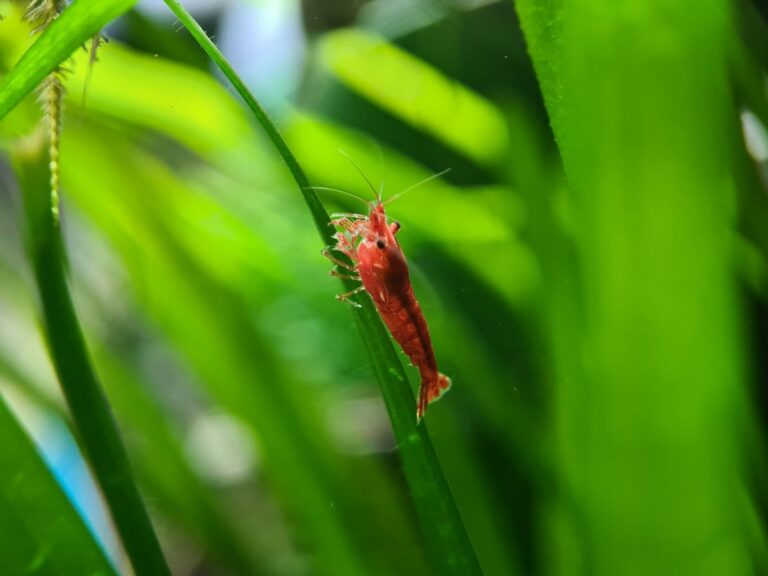
Amano and cherry shrimp
Its condition is important: tank temperatures should never fall below 17°C, which is about 63°F. An unheated tank follows the room, so this only works in a home that stays above that day and night, all winter. A thermometer that records the lowest overnight temperature will tell you quickly whether yours does.
It does not work for tropical fish like bettas, most tetras, gouramis or discus. If you keep those, the savings come from the steps in section 5, not from unplugging the heater. Also check that the fish you choose suit each other, not only the temperature. Some of the fish above are active schoolers that need space.
7. How to keep a fish tank warm without a heater
The heater may have failed, the power may be out, or you may just want to run less heat. The rule is the same: without a heater, nothing adds warmth except the room. Everything you do is about slowing the heat the water loses.
Keep the lid on. An open top loses heat through evaporation.
Insulate or wrap the tank. Foam board on the back, sides and bottom helps for the long term. A blanket or towels can buy a few hours in an emergency. Leave the front clear enough to check on your fish.
Keep the room warm. A tank with no heater follows the room temperature. Move a small tank to the warmest room, away from windows, doors and outside walls, and close the curtains behind it at night.
Turn off the air stone. Bubbles at the surface speed up cooling.
Keep the filter running if you have power. A pump that sits in the water adds a little of its own heat, and your fish still need the filtration.
Never pour in hot water or add a heated object. A sudden change is more dangerous than slow cooling.
Watch a thermometer. Check it first thing in the morning, when the room is coldest.
These steps buy time. They do not replace a heater for tropical fish such as bettas. If your room stays above about 63°F (17°C) day and night all winter, the fish in section 6 can live without one. If it does not, a heater sized to the tank is the safer choice.
In winter
Winter is when a heater is most likely to be undersized, and when a power cut is most likely to matter.
Before a cold snap: check that the heater keeps up at night. Take a thermometer reading first thing in the morning, when the room is coldest. Fit the lid, close the curtains behind the tank, and keep a spare heater if you live somewhere with cold winters.
During a power outage
Keep the lid on and wrap the tank in a blanket or towels to slow heat loss.
Move a small tank to the warmest room, away from windows and drafts.
Do not pour hot water into the tank or put a heated object in it. Sudden changes are more dangerous than slow cooling.
Skip feeding until the power is back. Waste builds up with no filter running.
When the power returns, check that the heater, filter and light came back on. Some controllers remember their settings after a power cut and some do not.
Every product in this section is made by hygger. Each heater and light page states the wattage and the tank size it is meant for, the two numbers you need to estimate running cost. Any brand that publishes those numbers can be compared the same way.
Shipping and returns
Shipping is free to most of the United States, though not to Alaska, Hawaii, US territories, P.O. boxes or APO/FPO addresses. Anything damaged in transit is replaced automatically. Change-of-mind returns are accepted within 30 days if the item is unused and in its original packaging, and you pay the return shipping. My betta tank setup guide summarizes the full terms, including the warranty.
Four pieces that help you see and control what you spend
A heater with an outside controller you can calibrate
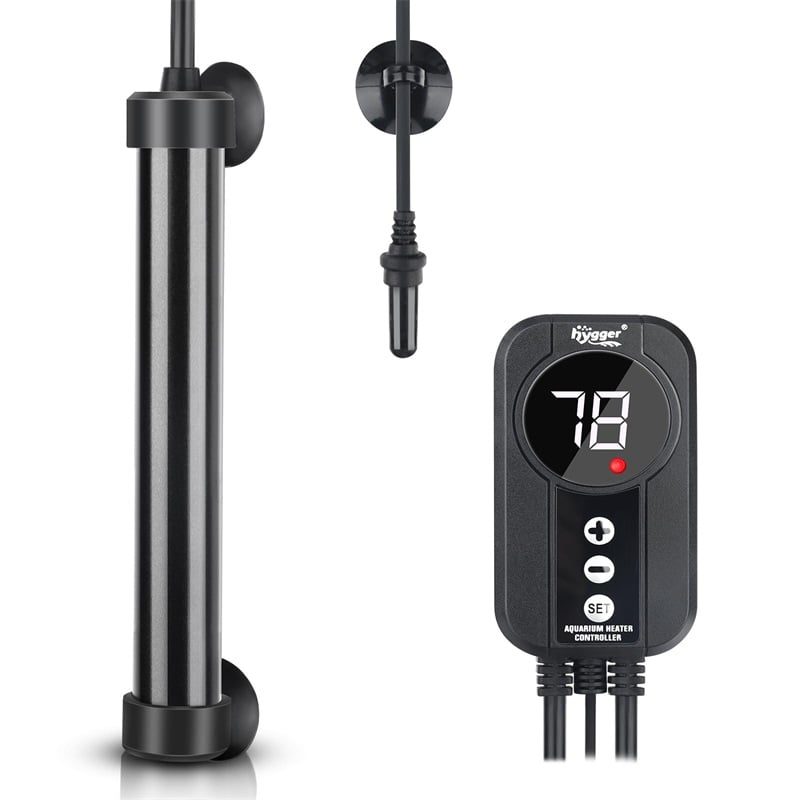
The Titanium Tube Heater (model HG085) costs $32.99 to $57.99, depending on wattage. It comes in five sizes:
50 watts for 10 to 15 gallons
100 watts for 15 to 20 gallons
200 watts for 30 to 40 gallons
300 watts for 50 to 60 gallons
500 watts for 70 to 80 gallons
The tube is titanium with a Teflon coating. The external controller shows the water temperature and sets it from 68 to 90°F. The maker gives its accuracy as 1°F. If the controller reads differently from your thermometer, it can be calibrated. It remembers its setting after a power failure. All five sizes were in stock when I checked; it had 10 reviews on the maker’s site. Check current price.
A lower-cost heater with a digital display
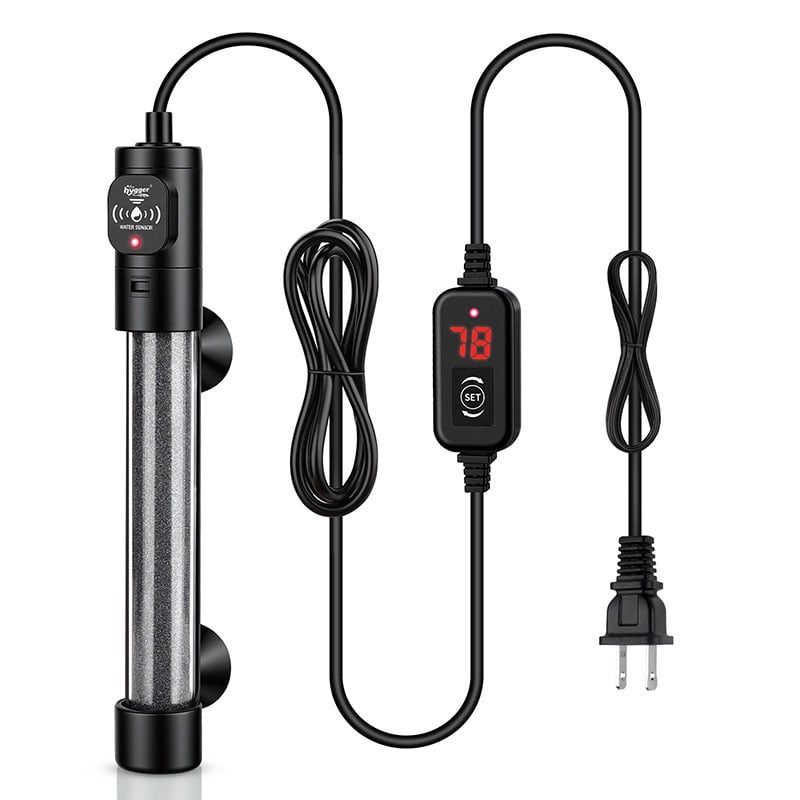
The Controllable Aquarium Heater (model HG273) has list prices of $19.99 to $31.99. Sizes run from 25 watts for 2 to 5 gallons up to 300 watts for 40 to 80 gallons. It sets 59 to 93°F and stops heating when it reaches the set temperature. Its controller shows the real water temperature. The maker says it switches off above 97°F and shows an error code if it is out of the water. The 200-watt size was out of stock when I checked, and the two smallest sizes were on sale from $16.39 on October 14, 2026; it had 9 reviews. Check current price.
A light that runs itself
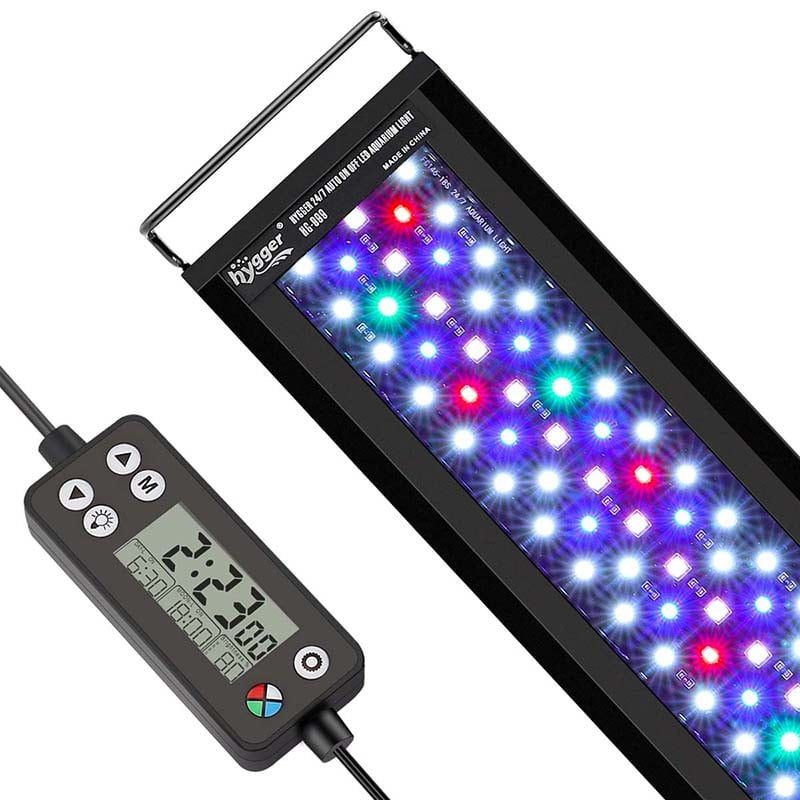
The Auto On Off LED Aquarium Light (model HG999) costs $29.99 to $69.99. Sizes run from 14 watts for 12 to 18-inch tanks up to 42 watts for 45 to 54-inch tanks. It has day, night and custom modes, with up to eight programmed periods a day. Sunrise and sunset fades last 15 minutes, and brightness adjusts from 10 to 100 percent. The maker says it keeps its program after a power outage. With 88 reviews averaging about 4.9, it is one of the most reviewed lights in the store. Check the price for your tank length.
A way to check the heater
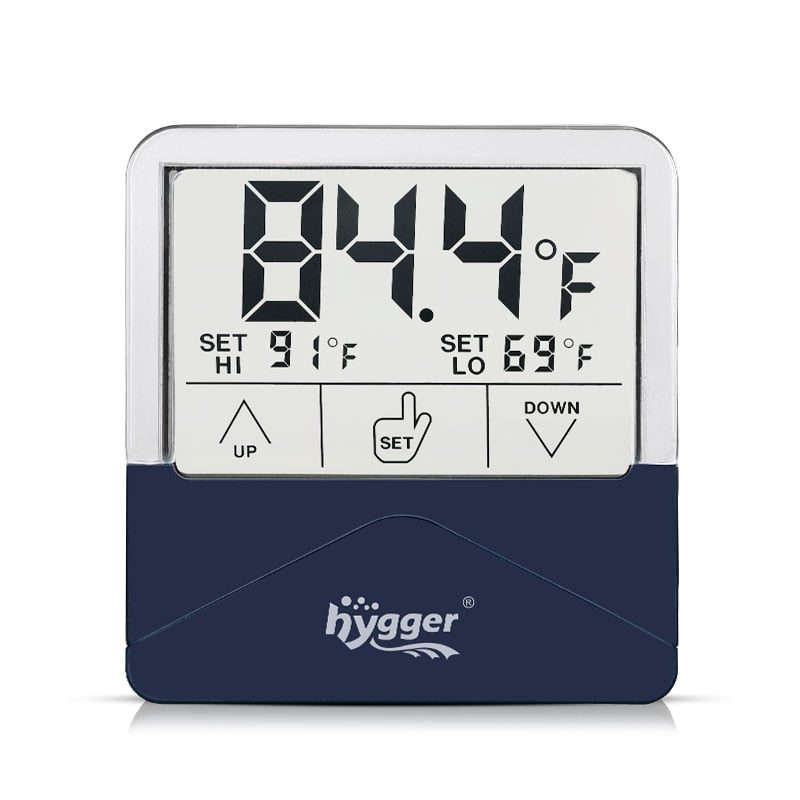
The External Aquarium Thermometer (model HG073) costs $13.99 to $15.99. It sticks to the outside of the glass and runs on a button battery, with a spare included. One version records the minimum and maximum temperature. That is exactly what you want for checking an unheated tank overnight. The other version flashes its display when the temperature leaves a range you set (it does not beep). Check current price.
The strong points are clear wattage charts by tank size and outside controllers on both heaters. The titanium model can be calibrated, and the light’s schedule survives a power cut. There are points to weigh, too. Review counts on the heaters are small (9 and 10 on the maker’s site), and the two heaters have different setting ranges. A heater does not lower your bill by itself; the lid and the room do most of that work. Returns for a change of mind also cost you the shipping. The two smallest sizes of the lower-cost heater were on sale on October 14, 2026, so the price you see may differ.
If this is not the right fit
If your tank already has a working heater, do not replace it to save energy. Fit a lid, insulate the back and check the setting first. A new heater of the same wattage will not use less electricity.
If you keep temperate fish from the list in section 6, check your room. If it stays above about 63°F, you may not need a heater at all. A min/max thermometer is the only purchase that makes sense.
If you run several tanks, measure the whole setup with a plug-in meter before buying anything. The biggest costs are often a single canister filter or one poorly covered tank.
If you would rather buy locally, look for a clear wattage chart, a readable controller and a shut-off feature. Any heater with those will do the same job. Pair it with a thermometer.
Fish tank electricity checklist
I know my electricity rate per kWh from my bill.
I have listed the wattage of every piece of equipment and how many hours it runs.
I have measured the tank with a plug-in meter for a week, or watched how often the heater light is on.
The tank has a lid and is not against a cold window or outside wall.
The heater is sized to the tank and set at the low end of what my fish actually need.
The light is on a timer for about 6 to 8 hours.
I have a thermometer, a blanket and a plan for a power cut.
Frequently asked questions
How much will a fish tank raise my electric bill?
For a typical heated freshwater tank of 10 to 30 gallons, often a few dollars to around $10 a month. That is at 2026 US average prices. The heater is usually the largest part. A large tank, a cold room or a canister filter with an outside motor can push it much higher. Measure yours with a plug-in meter for an exact figure.
How much electricity does a fish tank use per day?
In the 20-gallon example above, about 1 kWh a day. That is roughly 0.8 kWh for the heater, 0.12 for the filter and 0.11 for the light. A tank with no heater may use only a small fraction of that. A large heated tank in a cold room may use several times as much.
Do fish tanks use a lot of electricity?
Not compared with most household appliances. Lights, filters and air pumps typically use a few to a few tens of watts. A heater uses more, but only while it is switched on. How often that happens depends on how warm your room is.
Should I leave my aquarium heater on all the time?
Yes, leave it plugged in. A heater with a thermostat switches itself on and off to hold the set temperature. It only uses power when the water needs it. Unplug it before water changes, when the water level drops.
How cold is too cold for a fish tank?
It depends on the fish. Most tropical fish need water in the mid to high 70s Fahrenheit. The temperate fish the UK’s Ornamental Aquatic Trade Association recommends for unheated tanks should still never drop below about 63°F (17°C). If you are unsure about a particular species, ask a local fish store or a vet with fish experience.
How do you keep a fish tank warm without a heater?
Slow the heat loss. Keep the lid on and insulate or wrap the tank. Keep it in a warm room away from windows and drafts, and turn off the air stone. Never add hot water. For tropical fish this is a stopgap, not a replacement for a heater.
How can I keep my fish tank warm during a power outage?
Keep the lid on, wrap the tank in blankets or towels, and move a small tank to the warmest room. Do not add hot water, and do not feed until the power and filter are back.
Spend on heat you keep, not heat you lose
Most of what a fish tank costs to run is lost heat. It escapes through an open top, a cold wall or a stream of bubbles. Measure first, fix the losses, keep the temperature where your fish actually need it, and the bill usually takes care of itself. Buy new equipment only for the problem the meter shows you.
Photos: Vikram Mudaliar and Yosuke Ota on Unsplash. Product images: hygger, from its product pages. Electricity prices: US Energy Information Administration, Short-Term Energy Outlook released October 6, 2026 (residential average 17.3 cents per kWh in 2025, 18.2 cents forecast for 2026). Rule of thumb, lid, insulation and aeration notes: Aquarium Science, “Aquarium Electric Cost.” Unheated aquarium list: Ornamental Aquatic Trade Association, February 2025. Product details: hygger’s product pages, checked on October 14, 2026. Policies: hygger’s shipping policy, terms of use and warranty page, checked on October 8, 2026. Cost figures are estimates for illustration; your own costs depend on your equipment, room temperature and electricity rate.
M. Caelestis is the pen name of the editor of Time’s Ripple. Aquarium articles here are researched from manufacturers’ product pages and policies, widely used fish-care guidelines and public reviews, and checked against those sources on the date given in each article. Products are not hands-on tested unless an article says so.