Why AI is less of a threat to work than most people fear, what it shows about human judgment, and why that is harder news to sit with.
In 1911, Frederick Winslow Taylor published The Principles of Scientific Management, a book that went on to shape how work was organized for the next century.
His central argument was simple: separate the thinking from the doing. Managers plan; workers execute. Efficiency comes from specialization, from turning people into reliable, interchangeable parts of a system someone else designed.
Taylor’s ideas moved from factories to offices to whole industries. We built schools around them and designed careers around them. We learned to measure value by clean execution, reliable output and consistent performance inside a defined role.
For a hundred years, this appeared to work.
Now, in the space of a few years, that framework is coming apart. Nobody decided it should. A technology arrived that executes better than people whose training covered only execution.
The usual question, “will AI take my job?”, is emotionally loud and points in the wrong direction. The one worth losing sleep over is this:
What happens to a workforce that spent a century learning to stop thinking?
The illusion of expertise
Cognitive psychologists use the word fluency for how easily the mind processes information. Research by Rolf Reber and colleagues has shown that fluency produces a feeling of understanding, whether or not understanding is there.
Put plainly: doing something many times feels like knowing it deeply. The two are different.
A financial analyst who has built hundreds of DCF models may still not understand capital allocation. A copywriter who has written thousands of product descriptions may still not understand why people buy. A manager who has run dozens of performance reviews may still not understand what makes people perform.
What they have is procedural fluency: the ability to run a well-worn process quickly and accurately. It feels like expertise and earns the rewards of expertise, and in most organizations the two have been hard to tell apart.
AI has made the difference visible. When a language model can produce a competent financial analysis, a serviceable product description or a review template in seconds, organizations have to answer a question they have long avoided. What was the person contributing that mattered?
For many roles the honest answer is pattern recognition and execution within a defined domain, which is exactly what large language models do well. That says less about the people in those roles than about what a century of Taylorist management trained them to do, and it explains why the change feels so disorienting to so many people at once.
What the Industrial Revolution actually teaches
History helps here, though not the way optimists usually use it.
The standard argument goes: technology always destroys some jobs and creates others. Power looms replaced hand-weavers and created factory work; computers replaced typists and created programmers; AI will replace some roles and create others we can’t yet picture.
That is true in the long run and misleading in the short run, because it skips the variable that matters most to the people living through it: the transition.
During Britain’s industrial transformation, the economic historian Robert Allen found, real wages for workers barely rose for roughly half a century while output per worker grew. He calls it “Engels’ pause,” after the man who described those conditions in 1844. The Luddites, now mocked as people who feared progress, were largely skilled craftspeople responding rationally to the collapse of their livelihoods, which disappeared faster than new work arrived.
The disruption was real. So was the suffering, and so was the eventual recovery.
The recovery did not come from displaced workers learning to do what the machines did. It came from the surplus that machine-assisted work produced, which paid for whole new categories of human need: services, experiences, relationships and meaning that machines could not supply.
The open question about AI, and serious economists disagree on it, is whether this transition follows the old pattern or moves too fast and too broadly to repeat it.
Less uncertain: the workers who came through earlier transitions best were rarely the ones who competed head-on with the machines. They were the ones who understood what the machines could not do, and built their value there.
The anatomy of judgment
So what, exactly, can’t AI do?
It is harder to answer than it looks. Frontier AI systems have expanded so fast that confident answers from two years ago are already out of date. AI now automates or heavily assists writing, coding, image-making, legal research and parts of medical diagnosis.
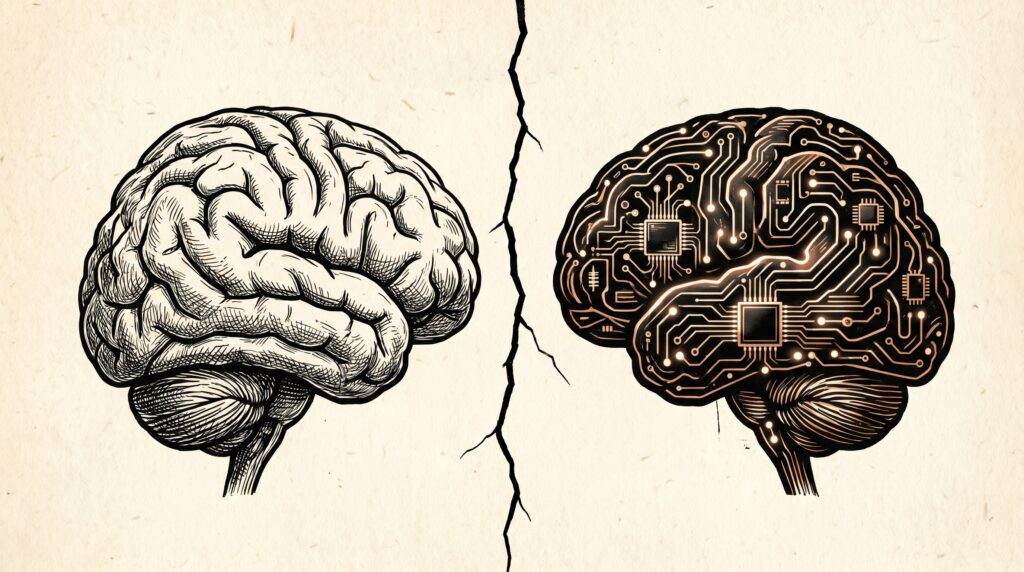
A cluster of capabilities still resists automation, and looking at why shows where human judgment still has the edge over AI.
Where human judgment still beats AI
First: judgment under moral uncertainty. AI systems are very good at optimizing toward a stated objective. They cannot decide which objectives are worth stating, or work through situations where competing values pull in different directions and no single metric settles it.
A doctor deciding how to tell a patient about a terminal diagnosis is not solving an optimization problem. The situation involves suffering, dignity, hope, a relationship, and the character of the person in the room. No formula computes the right answer. It takes presence, wisdom, and the moral attention that comes from having lived a human life.
Second: seeing patterns across unrelated domains. Historians such as Niall Ferguson argue that one of the most useful things history offers is recognizing when a present situation resembles a past one that few people are thinking about. Noticing that a supply-chain shock in 2021 rhymes with the oil shock of 1973 in ways that matter for decisions today is hard for systems that match surface patterns within a single domain. The resemblance lies below the surface.
Third: authentic conviction. AI systems produce plausible text without holding beliefs. Attentive readers can often sense the difference, even when they can’t say what they are sensing. A writer who believes what they are saying and one producing a competent imitation of belief look similar on any one page; over years, the difference adds up.
People and organizations earn trust over time because readers sense conviction behind what they say. Nobody can manufacture conviction. It is what remains after you have thought hard about something, changed your mind, and arrived at a position you earned.
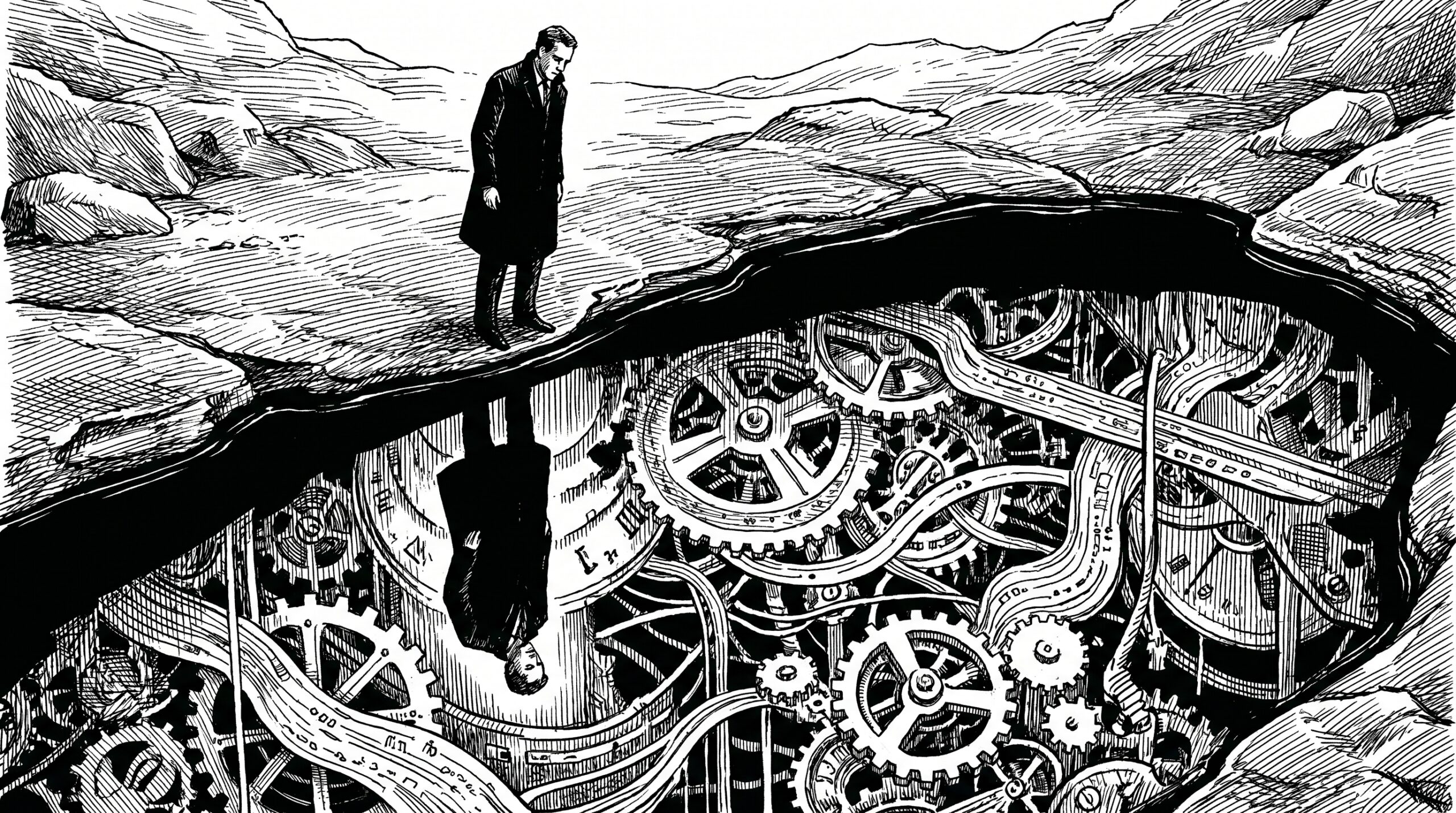
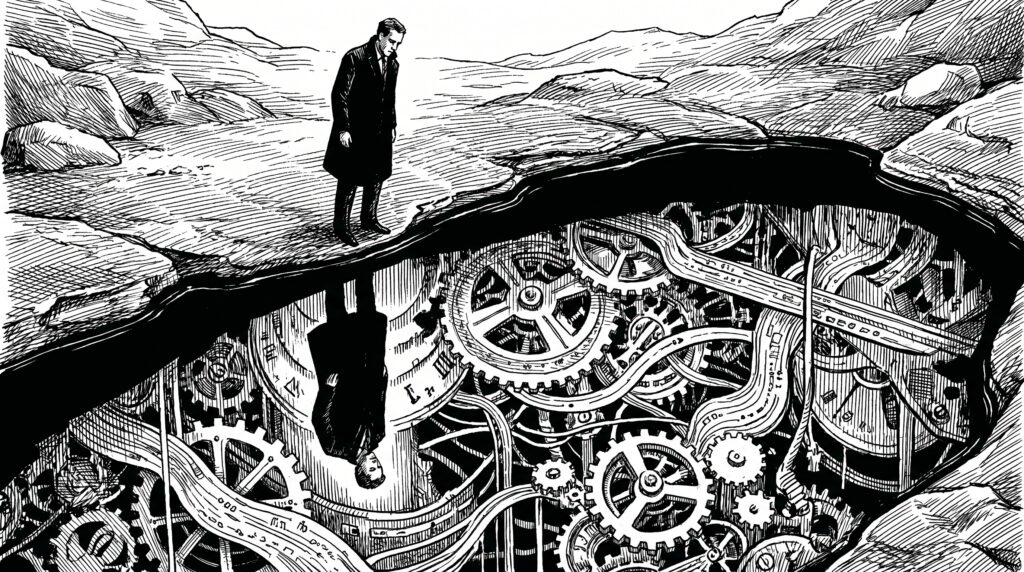
The mirror nobody asked for
Here is the uncomfortable implication.
If AI is showing that much of what we called skilled work was sophisticated execution, then learning another set of skills in the same category won’t help much.
What helps is building the capacities that always mattered more but were rarely rewarded while execution was the bottleneck: judgment, synthesis, conviction, asking better questions, and knowing which problems deserve solving.
That calls for a different relationship with knowledge. Instead of taking in information to reproduce it, take it in to think with. Let it complicate what you believe, notice where it conflicts with other things you hold, and treat it as material for your own conclusions.
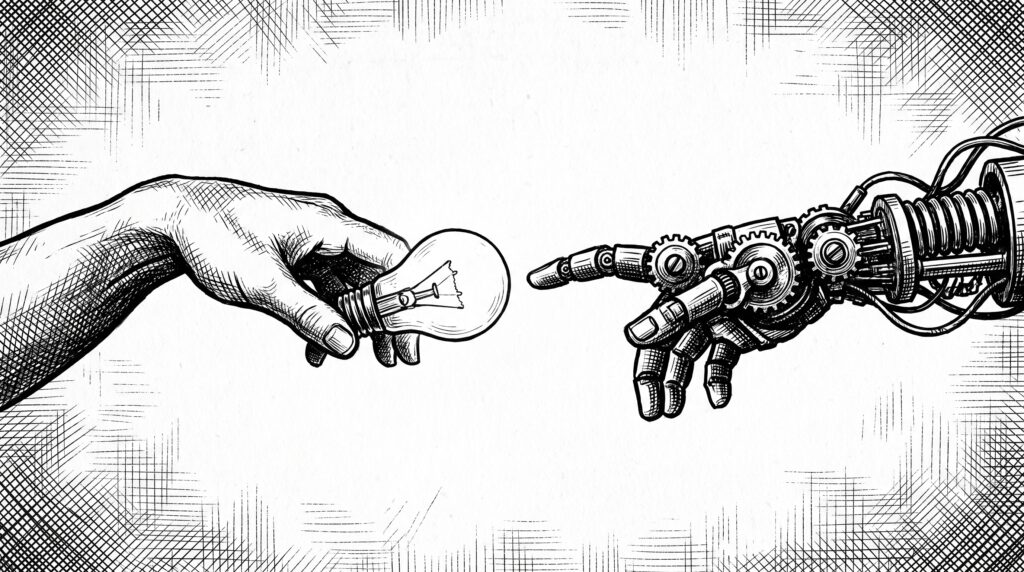
The irony is that AI can make this easier. When you can hand research, drafting and formatting to an assistant, the time and energy those tasks used to consume can, in principle, go to the harder work of thinking.
The people who do well in an AI-saturated workplace won’t be the best prompters. They will be the ones who treat AI output as raw material. They push back on it, test it and combine it with what the model couldn’t know. What they end up with reflects a mind and not just a model.
A practical framework for the transition
None of this means the transition will be painless. The economic disruption is real, and like every technological shift it will fall hardest on the people least able to absorb it.
For individuals trying to navigate it, a few principles look durable:
Invest in irreducible complexity. The hardest tasks to automate require weighing considerations that no one can fully write down. Look for work where you hold competing values at once and make calls that can’t be fully justified after the fact.
Build a record of real thinking. Not a portfolio of outputs, but evidence that you have engaged with hard questions: that you have changed your mind in public, admitted when you were wrong, and can show how your views developed. That record builds trust, and AI can’t fake it for you.
Use uncertainty deliberately. Developers train AI systems to sound confident. Being able to say “I don’t know, but here’s how I’m thinking about it,” and be believed, is increasingly rare and valuable.
Read the situation, not just the text. The most consequential decisions depend on information that isn’t in any document: a tone of voice, a pattern of behavior over months, a relationship with history. The sensitivity to read those signals belongs to people who have spent time with other people.
What this moment is
Taylor’s century is ending. The logic that said “separate thinking from doing, and reward reliable doing” has run its course, because the doing is being automated.
What remains is the harder, older work: forming your own views, making judgments you will stand behind, and being present with other people in ways that can’t be turned into a system.
AI will take over much of the execution. What it leaves behind is a question about how much of your work was ever judgment. The answer is uncomfortable for many of us, and it also points to the work that mattered most all along.
Time’s Ripple explores the ideas that shape how we live, work and understand ourselves. If this piece challenged something you thought you knew, share it with someone who would want to read it.
Robert C. Allen, “Engels’ pause: Technical change, capital accumulation, and inequality in the British industrial revolution,” Explorations in Economic History (2009)
Cal Newport, Deep Work (2016)
Erik Brynjolfsson and Andrew McAfee, The Second Machine Age (2014)
Robert Skidelsky and Edward Skidelsky, How Much Is Enough? (2012)
M. Caelestis is the pen name of the editor of Time’s Ripple. Aquarium articles here are researched from manufacturers’ product pages and policies, widely used fish-care guidelines and public reviews, and checked against those sources on the date given in each article. Products are not hands-on tested unless an article says so.